Highlights
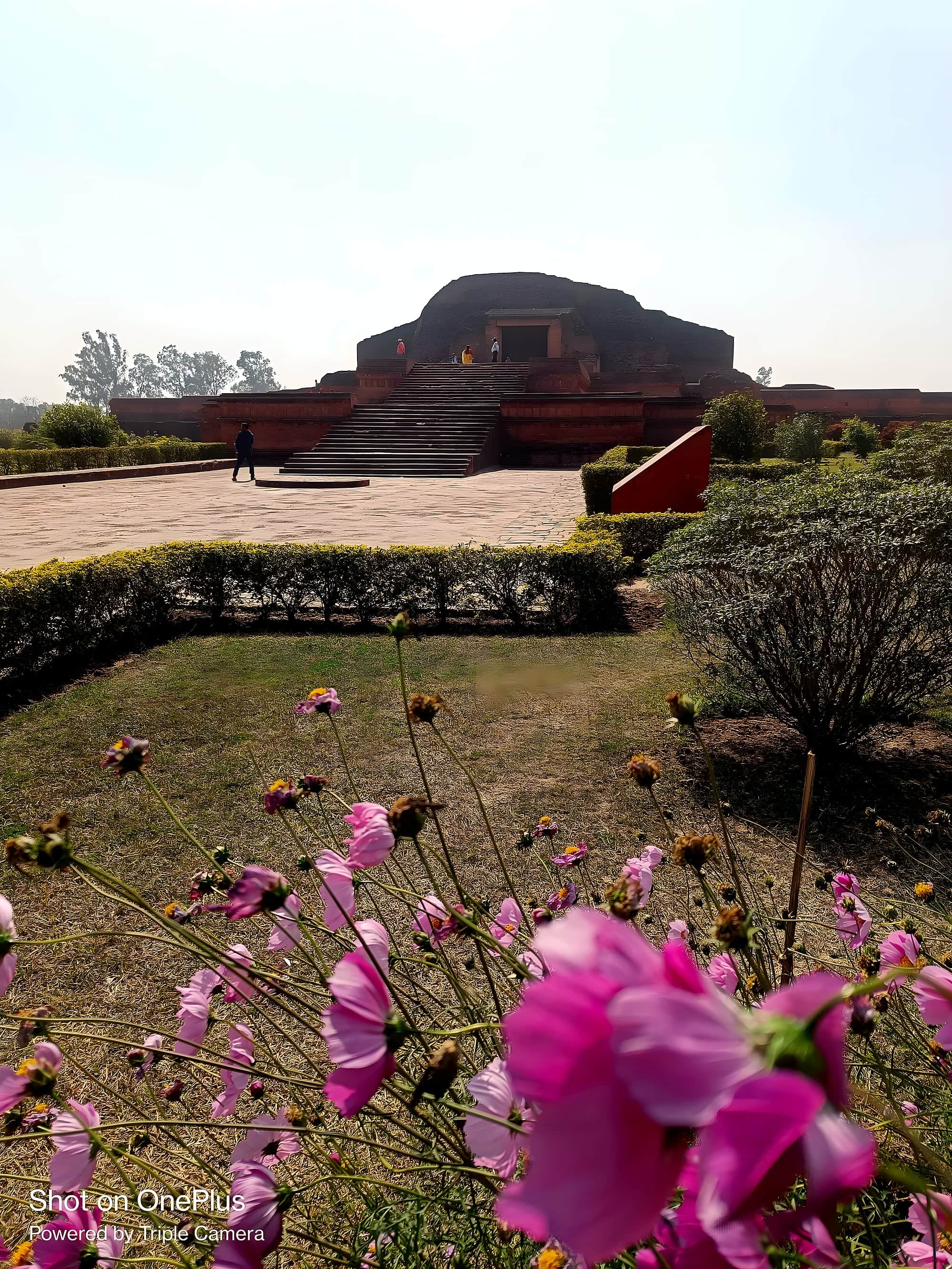
- The central stupa — Cruciform, with original terracotta plaques on the terraces..
- The monastic quadrangle — 208 cells — walk the full circuit..
- The library — Look for the water channels in the walls..
- Vikramshila Museum — Pala bronzes and stone sculpture from the dig..
In the late 8th century the Pala emperor Dharmapala founded a second great mahavihara on a hill above the Ganga east of Bhagalpur, and for the next four hundred years Vikramshila was the leading centre of Vajrayana — tantric — Buddhism in the world. Its most famous teacher, Atisha Dipankara, left for Tibet in 1040 and reformed Tibetan Buddhism; he is still revered there.
The excavated site is a square monastery 330 metres on each side, with 208 cells opening on to a courtyard, around a cruciform brick stupa with terracotta plaques of Buddhas, dancers and animals still fixed to its walls. A separate library building was cooled by water from an adjoining reservoir drawn through its walls — the first air-conditioned library in India.
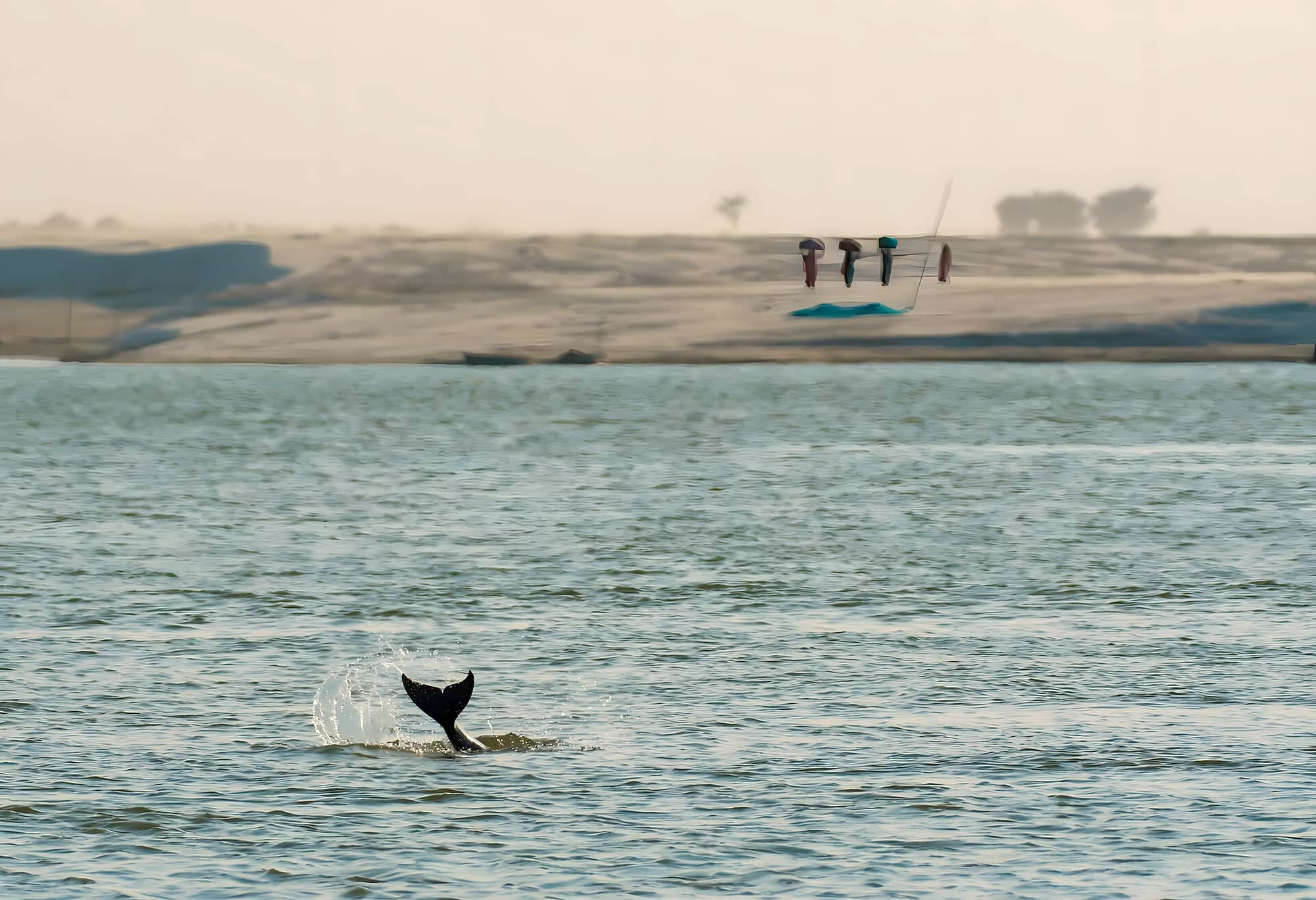
Like Nalanda it was destroyed around 1200. Unlike Nalanda it has almost no visitors. A small museum holds the finest sculpture; the Ganga here is also the Vikramshila Gangetic Dolphin Sanctuary, so a boat from Kahalgaon can show you dolphins and the ruins in one morning.
Chapter 01
How it came to be
By the 8th century Nalanda was old and a little decadent, and the Pala king Dharmapala founded a second university on a hill above the Ganga to teach the tantric Vajrayana. Vikramshila grew to a hundred teachers and a thousand students, six colleges around a central cruciform stupa-temple, and became the greatest school of its kind in the world. Its most famous scholar, Atisha, was invited to Tibet in 1040 and reformed Tibetan Buddhism; the Kadam and Gelug schools, and so the Dalai Lamas, descend from his teaching.
Bakhtiyar Khalji's army destroyed it around 1193, a few years after Nalanda; a Tibetan account says the library was burned and the monks killed or fled to Nepal and Tibet. The site was forgotten under a village called Antichak until excavations in 1960–69 and again from 1972 uncovered the plan.
Chapter 02
What it's like now
What has been dug is remarkably complete: a huge square monastery of 208 cells around a courtyard, with the stupa-temple in the centre — a cross-shaped brick mass 15 metres high with terracotta plaques of Buddhas, dancers and animals still in place on its lower walls. A library building with a water-cooling channel, a Tibetan-style temple, and a few hundred metres of the Ganga bank complete the picture.
The museum holds the stone sculpture and bronzes. The ruins sit on the edge of the Vikramshila Gangetic Dolphin Sanctuary; a boat from Kahalgaon ghat combines the two. Bhagalpur is the base.
Chapter 03
What to see
- 01
The central stupa
Cruciform, with original terracotta plaques on the terraces.
- 02
The monastic quadrangle
208 cells — walk the full circuit.
- 03
The library
Look for the water channels in the walls.
- 04
Vikramshila Museum
Pala bronzes and stone sculpture from the dig.
- 05
Dolphin boat from Kahalgaon
Early morning on the river for Gangetic dolphins.
Chapter 04
A perfect day
6:00
Dolphin boat from Kahalgaon or Barari ghat at dawn.
9:00
Vikramshila: the monastery, the stupa-temple terracottas, the library.
11:00
Site museum; the Ganga bank and the view to Kahalgaon's rock islands.
13:00
Lunch in Kahalgaon; the Bateshwar Sthan rock carvings nearby.
15:30
Return to Bhagalpur; the silk weavers at Nathnagar.
Chapter 05
Stay, eat, celebrate
Where to stay
Bhagalpur (50 km) — a reasonable spread of hotels; nothing at the site.
Where to eat
Dhabas at Kahalgaon; Bhagalpur for the proper meal — fish, and the Katarni rice the district is famous for.
Festivals & seasons
Vikramshila Mahotsav (February) — cultural programmes at the ruins.
Practical
Getting there
Fly
Patna Airport (PAT) 250 km; Deoghar (DGH) 100 km.
Train
Kahalgaon 13 km; Bhagalpur Junction 50 km, with trains from Patna, Delhi and Kolkata.
Road
50 km east of Bhagalpur on NH-80; 2 hours.
On the map · Vikramshila is at 25.3207°N, 87.2947°E in Bhagalpur district, about 285 km (7 h) by road from Patna.
Before you go · Best time to visit · Safety, dress code & money · What to eat nearby
Practical
Distances from Vikramshila
Road distance and realistic driving time on Bihar roads — plan around these, not the straight line on a map.
From the gateway cities
| Bhagalpur → Vikramshila | 42 km | 1 h |
| Darbhanga → Vikramshila | 219 km | 5 h |
| Muzaffarpur → Vikramshila | 277 km | 6½ h |
| Patna → Vikramshila | 285 km | 7 h |
| Gaya → Vikramshila | 310 km | 7½ h |
To nearby places
| Vikramshila → Bhagalpur | 42 km | 1 h |
| Vikramshila → Sultanganj | 73 km | 1½ h |
| Vikramshila → Mandar Hill | 77 km | 1½ h |
| Vikramshila → Munger | 108 km | 2½ h |
| Vikramshila → Bhimbandh Wildlife Sanctuary | 121 km | 3 h |
| Vikramshila → Simultala | 131 km | 3 h |
| Vikramshila → Ugratara, Mahishi | 132 km | 3 h |
| Vikramshila → Kusheshwar Asthan | 150 km | 3½ h |
| Vikramshila → Kanwar Lake | 157 km | 3½ h |
| Vikramshila → Ashok Dham, Lakhisarai | 158 km | 3½ h |
| Vikramshila → Nagi & Nakti Bird Sanctuaries | 163 km | 4 h |
| Vikramshila → Madhubani | 218 km | 5 h |
Estimates: road ≈ 1.3 × straight-line, ~40 km/h average. All Bihar distances →
Practical
Vikramshila tickets, entry fee & timings
What visitors have been paying recently. Fees change without notice — treat these as a planning guide and check the official page where one exists.
Vikramshila ruins (ASI) & site museum
- Hours
- Sunrise – sunset; museum 10:00 – 17:00 · closed Museum closed Fridays
- Fee
- ~₹25 Indian / ₹300 foreign; museum ~₹5.
- Booking
- Counter. Reach from Kahalgaon (13 km) or Bhagalpur (~45 km).