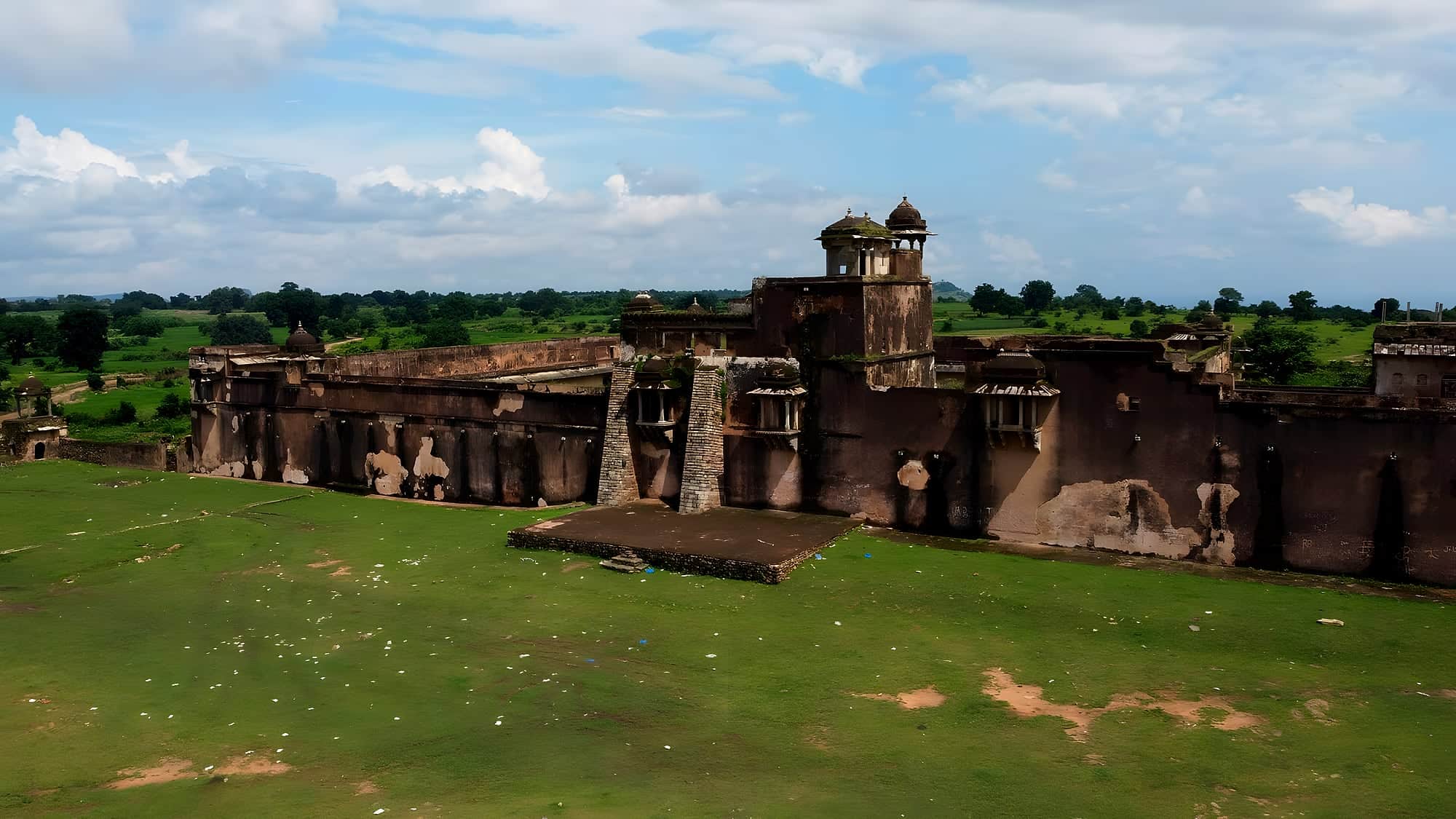
Highlights
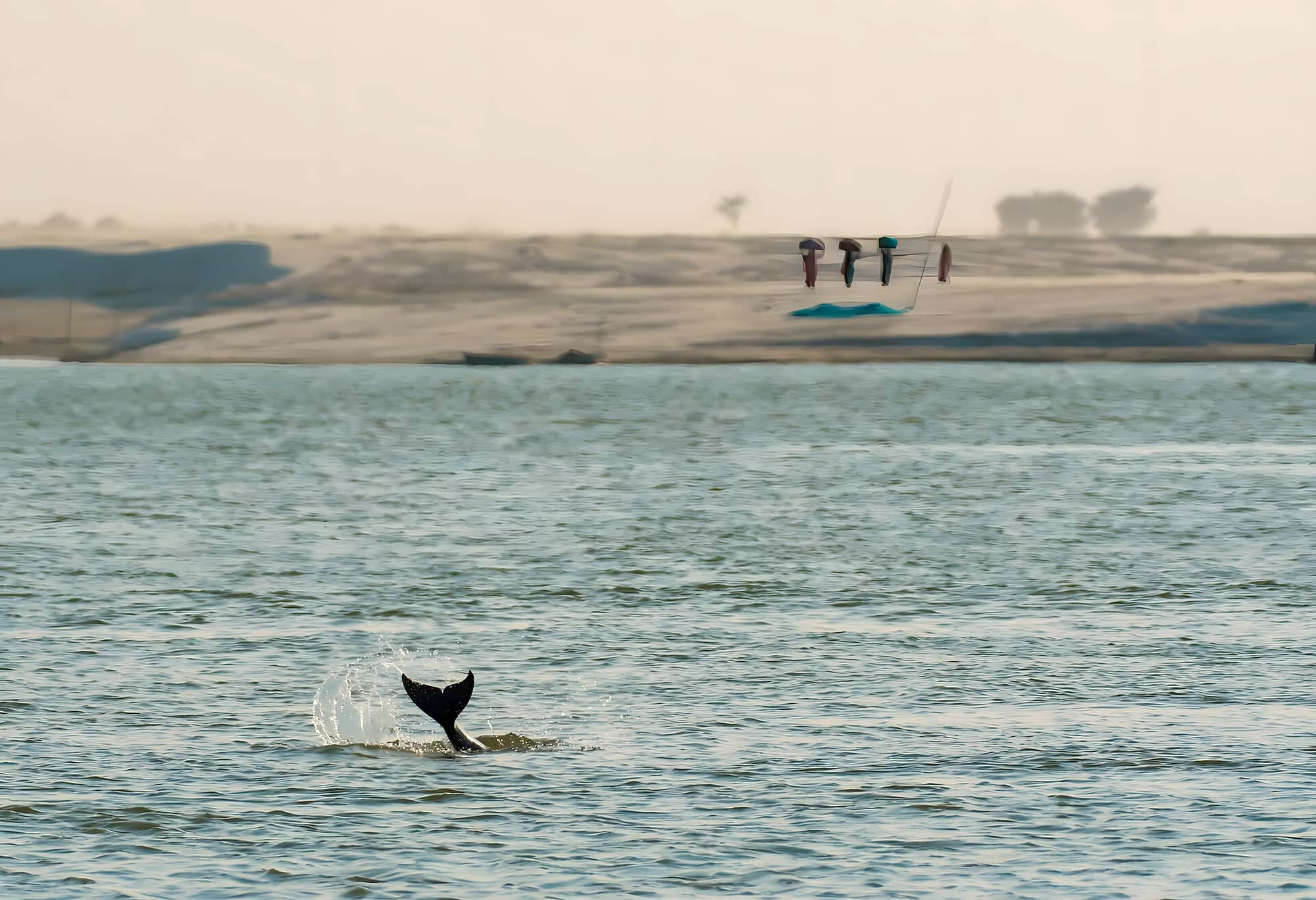
- Dolphin boat — Barari ghat or Kahalgaon, first light; two hours..
- Nathnagar silk looms — Watch tussar being woven and buy at source..
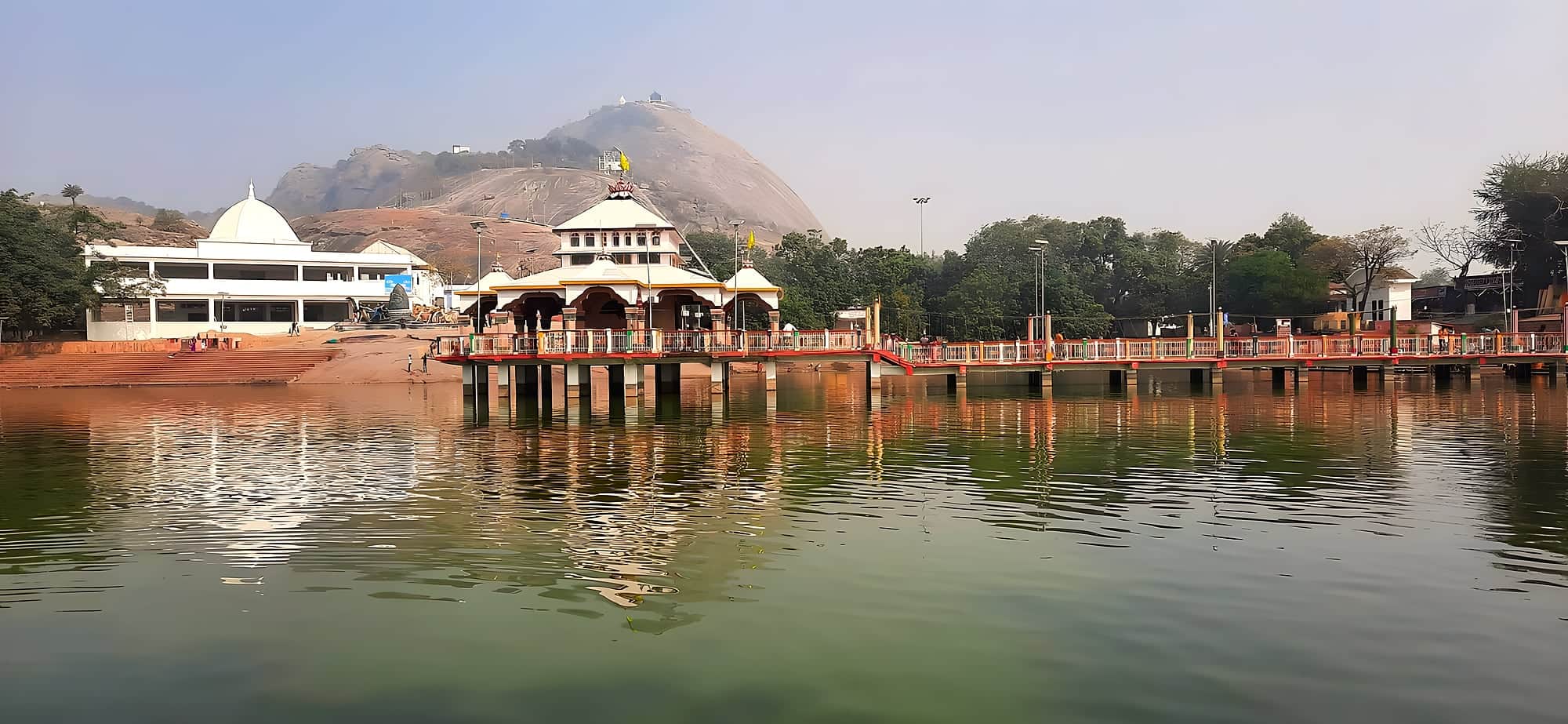
- Ajgaibinath, Sultanganj — Temple on a rock island; the Kanwar yatra begins here in Shravan..
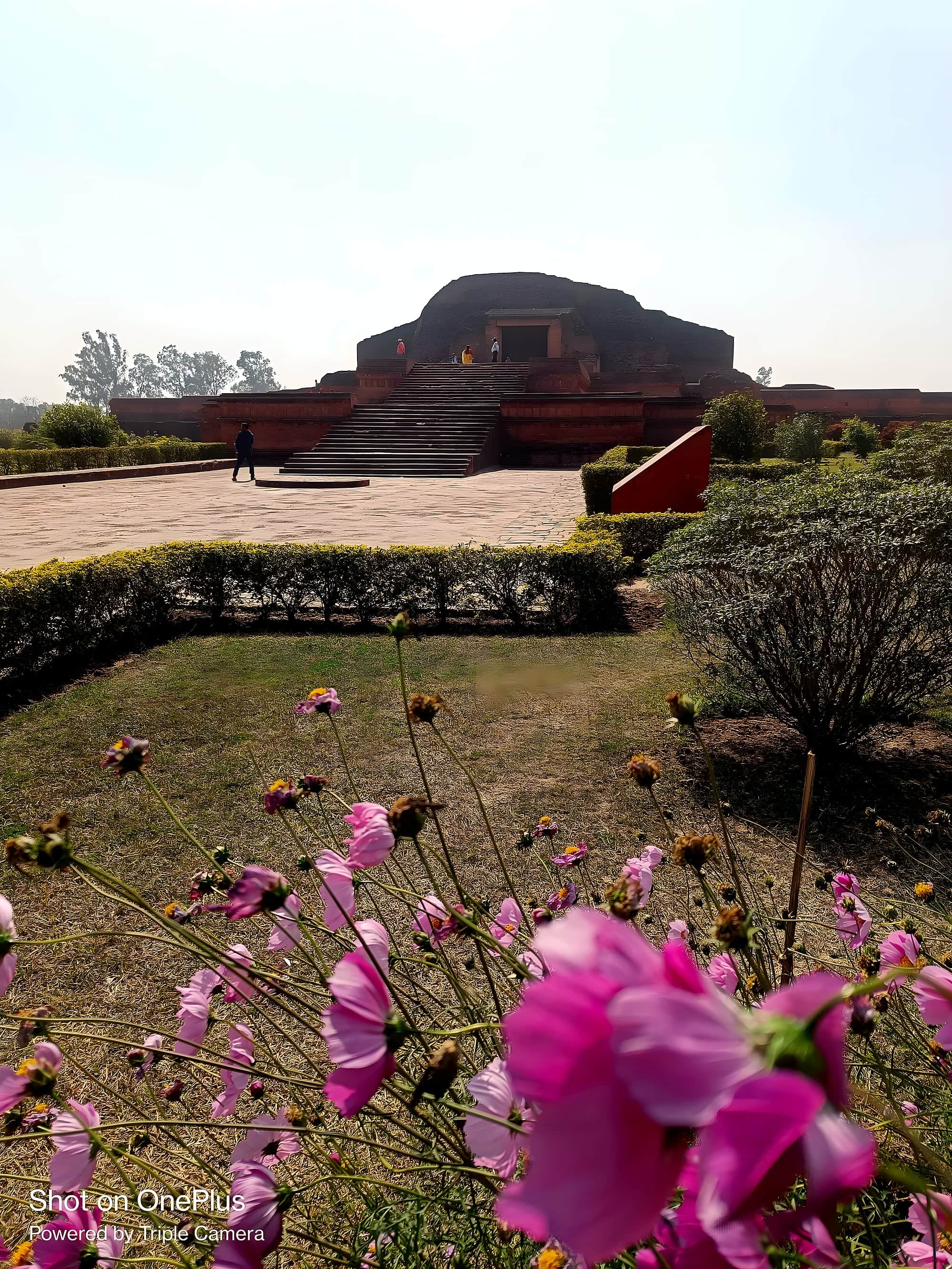
- Vikramshila ruins — 50 km east — see separate guide..
Bhagalpur was Champa, capital of the kingdom of Anga in the Mahabharata and the Buddhist texts, where Karna ruled and the Buddha visited; today it is a river city of half a million known across India for one thing — silk. Tussar, the wild golden silk, has been woven in Nathnagar and Champanagar for centuries, and the looms are still there, open to visitors who ask.
The Ganga here is the Vikramshila Gangetic Dolphin Sanctuary — 60 km of river from Sultanganj to Kahalgaon, declared in 1991, the only protected area for the Gangetic dolphin in India. Boats from Barari ghat or Sultanganj in the early morning will show you dolphins surfacing to breathe, along with gharial, turtles and a great deal of birdlife on the chars (sandbanks).
Sultanganj, 25 km west, has the Ajgaibinath temple on a granite island in the river — the starting point for the Kanwar pilgrimage, when a million saffron-clad devotees carry Ganga water 105 km on foot to Deoghar every July and August. The famous Sultanganj Buddha, a 2-metre Gupta bronze found here, is in Birmingham.
Chapter 01
How it came to be
Champa, the capital of the Anga kingdom conquered by Bimbisara, lay under what is now Champanagar; it was a port city trading down the Ganga to the sea, and the Buddha and Mahavira both preached here. Bhagalpur grew as a Mughal and then Company town; the silk trade is at least as old, and Bhagalpuri tussar was exported to Europe in the 19th century.
The dolphin sanctuary, India's only one, was declared in 1991 along the stretch where the river narrows past the rock islands of Sultanganj and Kahalgaon. The Gangetic dolphin became India's national aquatic animal in 2009 and a Dolphin Research Centre opened in Patna in 2024.
Chapter 02
What it's like now
Go to the river first. A country boat from Barari ghat at sunrise finds the dolphins within minutes — a grey back, a breath, gone — against a kilometre-wide river of sandbanks and fishermen. The Ajgaibinath temple on its rock island at Sultanganj, where the Kanwar pilgrims fill their pots for Deoghar every monsoon, is the other riverside set-piece.
In town, the silk lanes of Nathnagar and Champanagar are a working industry: handlooms clacking behind doors, dyeing yards, showrooms selling tussar by the metre at a fraction of city prices. The Kuppa Ghat ashram's underground tunnels, the Mandar Hill and Vikramshila day trips, and Bhagalpur's Katarni rice and mangoes round it out.
Chapter 03
What to see
- 01
Dolphin boat
Barari ghat or Kahalgaon, first light; two hours.
- 02
Nathnagar silk looms
Watch tussar being woven and buy at source.
- 03
Ajgaibinath, Sultanganj
Temple on a rock island; the Kanwar yatra begins here in Shravan.
- 04
Vikramshila ruins
50 km east — see separate guide.
- 05
Kuppaghat
Riverside ashram and gardens.
Chapter 04
A perfect day
5:45
Boat from Barari ghat for the dolphins — two hours on the river.
8:30
Breakfast; Kuppa Ghat ashram and its tunnels on the bank.
10:30
Nathnagar silk weavers — watch, then buy.
13:00
Lunch; drive to Sultanganj for Ajgaibinath on its rock island.
16:30
Back along the river road; sunset at Barari.
Chapter 05
Stay, eat, celebrate
Where to stay
Several decent mid-range hotels in the Tilka Manjhi and station areas; it is the natural base for Vikramshila and Mandar Hill.
Where to eat
Ganga fish — rohu, hilsa in season — in mustard; Katarni rice; the mangoes (Zardalu) in June; the old sweet shops for kalakand.
Festivals & seasons
Shravani Mela (July–August) — millions of saffron-clad Kanwariyas collect Ganga water at Sultanganj to walk 105 km to Deoghar; Bihula-Bishari festival in August; Chhath on the ghats.
Practical
Getting there
Fly
Patna Airport (PAT) 220 km; Deoghar (DGH) 100 km.
Train
Bhagalpur Junction, with Vikramshila Express from Delhi, and trains from Patna and Kolkata.
Road
220 km east of Patna on NH-80 via Munger; 5–6 hours.
On the map · Bhagalpur is at 25.2425°N, 86.9842°E in Bhagalpur district, about 247 km (6 h) by road from Patna.
Before you go · Best time to visit · Safety, dress code & money · What to eat nearby
Practical
Distances from Bhagalpur
Road distance and realistic driving time on Bihar roads — plan around these, not the straight line on a map.
From the gateway cities
| Darbhanga → Bhagalpur | 194 km | 4½ h |
| Muzaffarpur → Bhagalpur | 246 km | 6 h |
| Patna → Bhagalpur | 247 km | 6 h |
| Gaya → Bhagalpur | 268 km | 6½ h |
To nearby places
| Bhagalpur → Sultanganj | 32 km | 0½ h |
| Bhagalpur → Vikramshila | 42 km | 1 h |
| Bhagalpur → Mandar Hill | 59 km | 1 h |
| Bhagalpur → Munger | 69 km | 1½ h |
| Bhagalpur → Bhimbandh Wildlife Sanctuary | 79 km | 1½ h |
| Bhagalpur → Simultala | 95 km | 2 h |
| Bhagalpur → Ugratara, Mahishi | 110 km | 2½ h |
| Bhagalpur → Ashok Dham, Lakhisarai | 117 km | 2½ h |
| Bhagalpur → Kusheshwar Asthan | 119 km | 2½ h |
| Bhagalpur → Nagi & Nakti Bird Sanctuaries | 123 km | 3 h |
| Bhagalpur → Kanwar Lake | 124 km | 3 h |
| Bhagalpur → Pawapuri | 191 km | 4½ h |
Estimates: road ≈ 1.3 × straight-line, ~40 km/h average. All Bihar distances →