Highlights
- Darbhanga Fort (Qila) — The 1930s red-brick walls, Lahori-gate style, and the Rambagh palace inside..
- Nargona & Anand Bagh palaces — Now university buildings; the Maharaja's library..
- Shyama Mai temple — Kali temple on the royal cremation ground; lively, especially in the evening..
- Madhubani painters' villages — Jitwarpur and Ranti, 25 km north; buy directly from the artists..
The Maharajas of Darbhanga ruled 6,200 square kilometres of north Bihar as zamindars from the 16th century until 1947 and became the wealthiest landed family in India. They built accordingly: the Qila, a vast red-brick fort wall begun in 1934 and never finished, encloses the Rambagh palace; the Anand Bagh palace with its library of Sanskrit manuscripts is now Kameshwar Singh Darbhanga Sanskrit University, and the Nargona palace, built after the 1934 earthquake, is the main university campus.
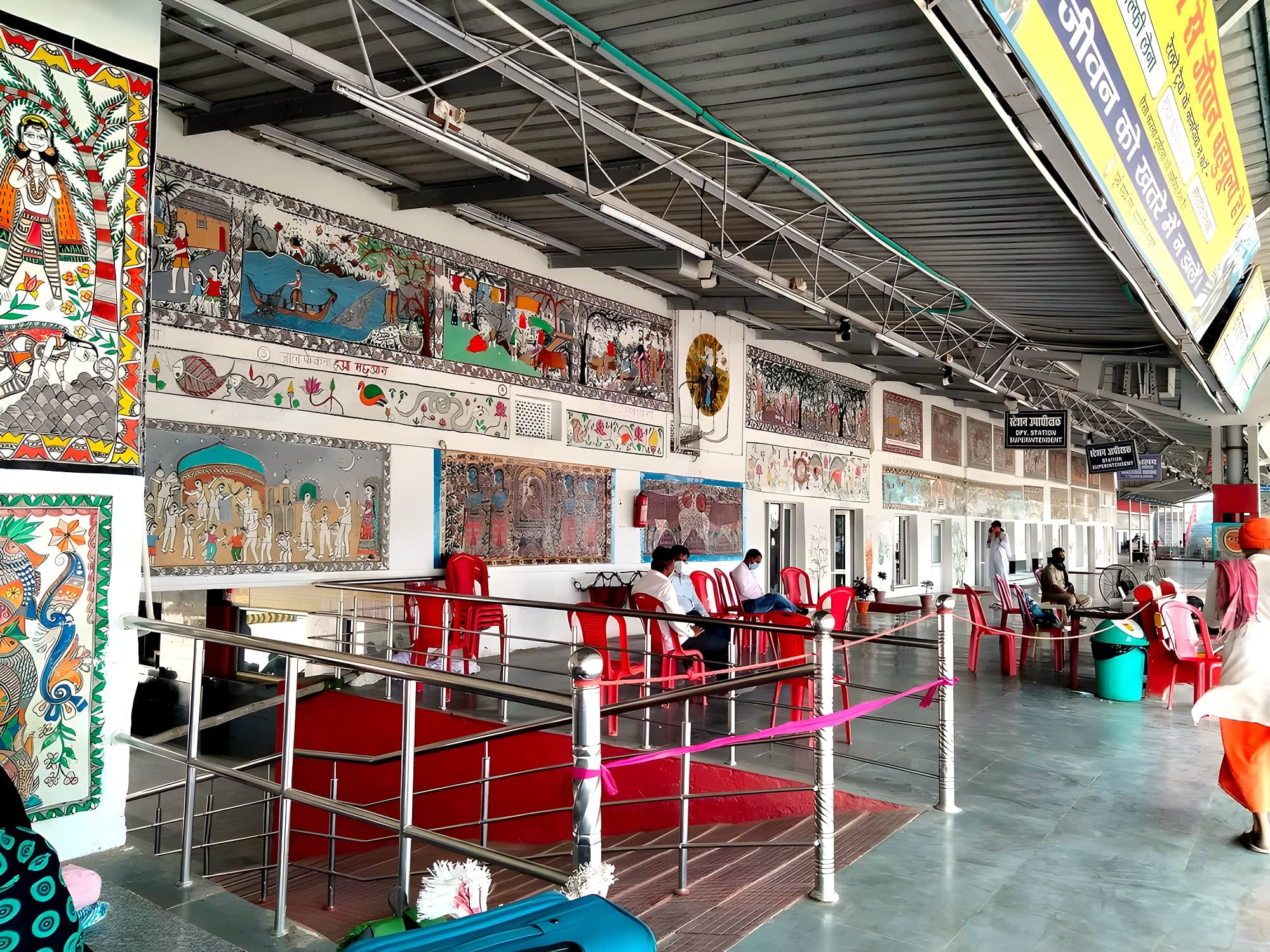
Darbhanga is also the cultural capital of Mithila — the region between the Ganga and the Nepal border where Maithili is spoken and where the Ramayana places Sita's birth. Mithila painting, the vivid folk art of courtyard walls now done on paper and known internationally as Madhubani, comes from the villages around; the town of Madhubani is 25 km north and the painters' villages of Jitwarpur and Ranti are near it.
Fish and makhana (fox-nut) are the food; the Shyama Mai temple, built by the Maharaja in 1933 on his father's cremation ground, is the temple where every wedding and every new car in Darbhanga is blessed.
Chapter 01
How it came to be
Mithila — the land of King Janaka and Sita — kept its Sanskrit learning and its Maithili literature alive through every empire, and from the 16th century the Darbhanga Raj, a Brahmin dynasty granted the estate by Akbar, was its patron. By 1900 it was the richest zamindari in India; the Maharajas built a city of palaces, endowed universities, financed the Indian National Congress, and in 1934 lost most of it to an earthquake.
The Raj was abolished with independence; the Nargona Palace became Lalit Narayan Mithila University, the Anand Bagh palace the Sanskrit university, and the Rambagh fort's walls now enclose a neighbourhood. Meanwhile the painted walls of Mithila's village homes became, in the 1960s drought-relief programme, the Madhubani painting on paper that is now Bihar's best-known art.
Chapter 02
What it's like now
Darbhanga is a crowded, cultured, slightly melancholy city of ponds and palaces. The university campus is the place to see them — the Nargona's long façade, the Lakshmeshwar Vilas, the Bela Palace — along with a museum of the Raj's collection. The Shyama Mai temple, built on a cremation ground inside the Rambagh fort, is the city's living shrine; the Kali-temple-on-a-pyre idea is pure Mithila.
The real reason to come is thirty kilometres north: the Madhubani villages of Jitwarpur and Ranti, where every house is painted and several national-award artists work from front rooms. Buy directly, watch the work, and learn the difference between Bharni, Kachni and Godna styles. Kusheshwar Asthan bird sanctuary is a winter add-on.
Chapter 03
What to see
- 01
Darbhanga Fort (Qila)
The 1930s red-brick walls, Lahori-gate style, and the Rambagh palace inside.
- 02
Nargona & Anand Bagh palaces
Now university buildings; the Maharaja's library.
- 03
Shyama Mai temple
Kali temple on the royal cremation ground; lively, especially in the evening.
- 04
Madhubani painters' villages
Jitwarpur and Ranti, 25 km north; buy directly from the artists.
- 05
Saurath Sabha
The annual Maithil Brahmin marriage fair at Saurath in June/July.
Chapter 04
8 temples & sights, one by one
- 01
Raj Darbhanga · 1930s
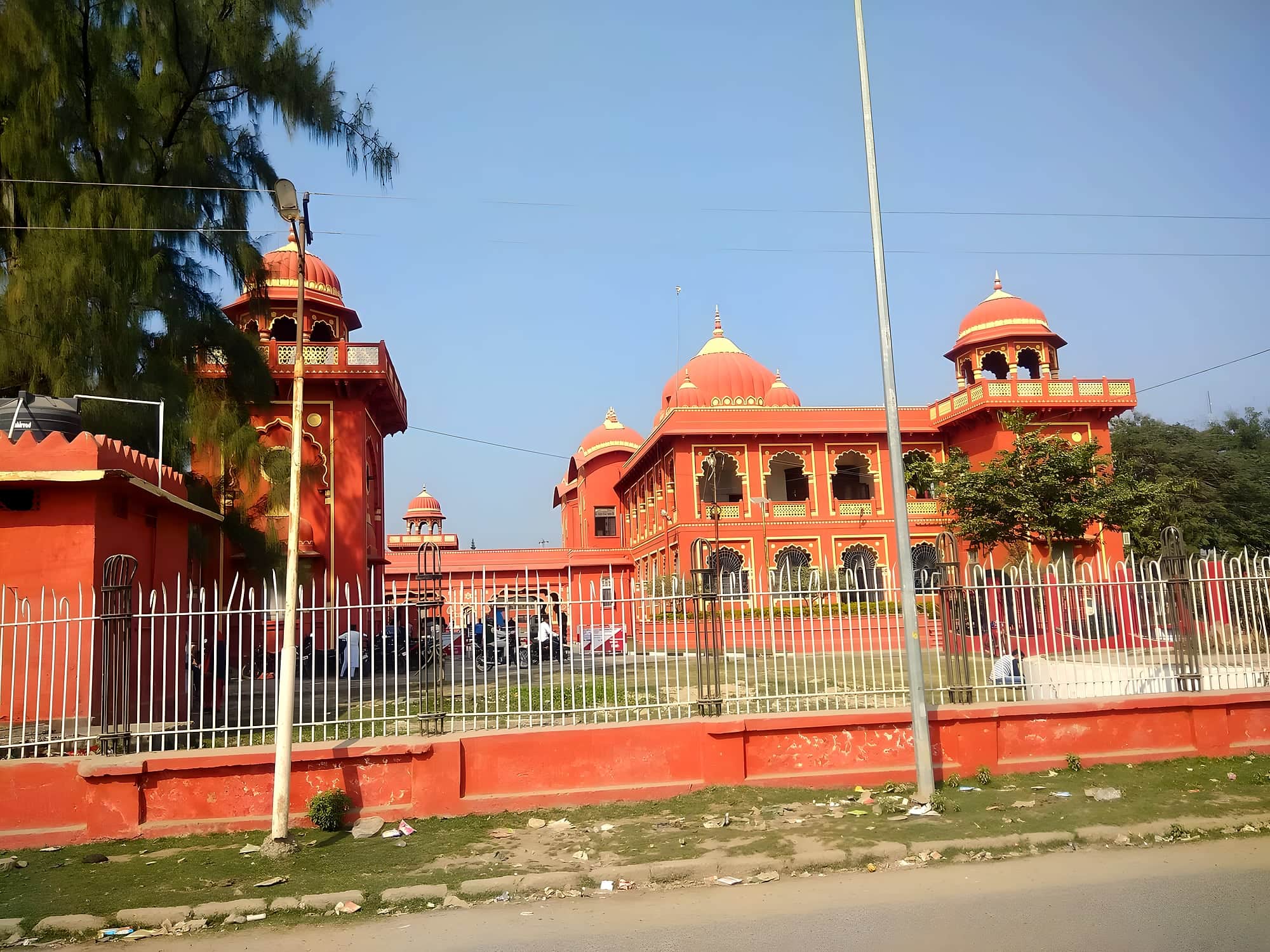
Darbhanga Fort (Qila)
Maharaja Kameshwar Singh's unfinished red-brick fort wall, consciously modelled on Delhi's Red Fort, encloses the Rambagh palace and the family's temples. Walk the gate and the moat side; the palace itself is private.
- Where
- Qila Ghat, old town
© RANJEET KUMAR · CC BY-SA 4.0 - 02
Palaces · university
Anand Bagh & Nargona palaces
The 1880s Anand Bagh palace with its fountains and the earthquake-proof Nargona palace of 1934 — built after the great quake flattened the earlier ones — now house the university. The Maharaja's library of 20,000 Sanskrit manuscripts is in the Kameshwar Singh Sanskrit University next door.
- Where
- LN Mithila University campus
- Hours
- Campus open in daytime
- 03
Kali · cremation ground
Shyama Mai temple
Built in 1933 on the funeral pyre of Maharaja Rameshwar Singh; the goddess stands on Shiva's chest inside a Bengal-style temple. Unusually for a cremation-ground shrine it is a wedding and tonsure venue; evenings are lively.
- Where
- University campus, Bela
- Hours
- Dawn to late evening
- 04
Museum · 1957
Chandradhari Museum
A donated private collection — Mughal miniatures, Pala sculpture, ivory, Tibetan thangkas and odd Victoriana — in an old bungalow. Small, unloved and worth an hour.
- Where
- Qila road, near the fort
- Hours
- 10:30 am – 4:30 pm, closed Monday
- 05
Museum
Maharajadhiraja Lakshmeshwar Singh Museum
The Raj family's own silver, palanquins, Belgian glass, hunting trophies and portraits — the furniture of a princely estate that once ruled 6,000 villages.
- Where
- Near the Qila
- Hours
- 10:30 am – 4:30 pm, closed Monday
- 06
Ramayana · Ahilya's deliverance
Ahilya Sthan
The temple where Rama's touch freed Ahilya from Gautama's curse, with a footprint stone and a tank. Mithila ties the Ramayana to its soil everywhere; this is one of the quietest knots.
- Where
- Kamtaul, 30 km north-west
- 07
Shiva · bird sanctuary · 65 km
Kusheshwar Asthan
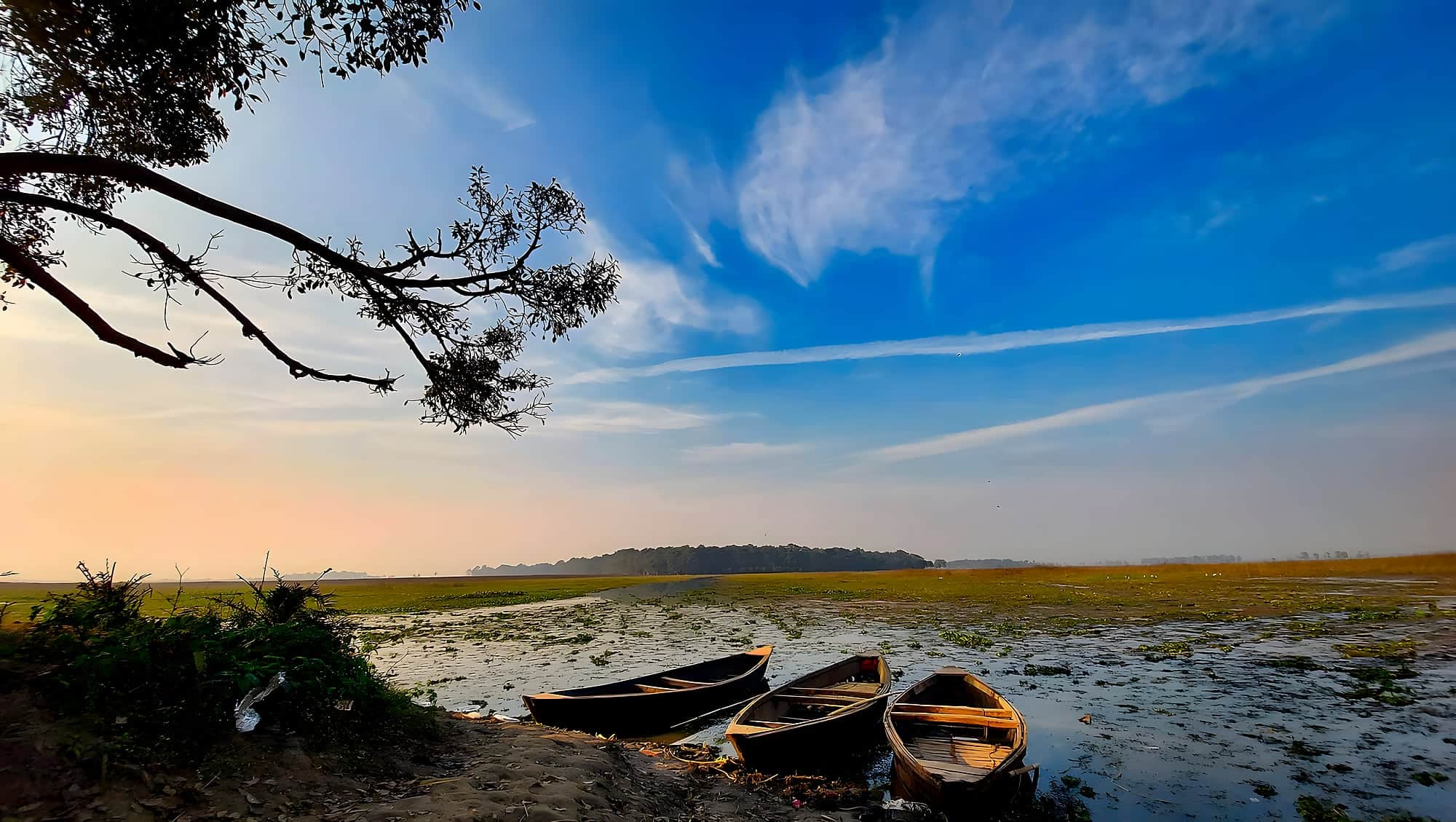
The Shravan pilgrimage temple and the winter wetland of geese and storks in the Kosi backwaters. See the separate Kusheshwar Asthan page.
- Where
- Biraul, south-east
© Mausam Nandan · CC BY-SA 4.0 - 08
Mithila art · 25 km
Madhubani painters' villages
Buy from the artists' homes — the women of Jitwarpur and Ranti have national awards on their walls. Natural-pigment paper work costs more and fades less. See the Madhubani page.
- Where
- Jitwarpur, Ranti, Rasidpur
© Sntshkumar750 · CC BY-SA 4.0
Chapter 05
A perfect day
7:00
Shyama Mai temple and the Rambagh fort walls; tea in the old bazaar.
9:00
University campus: Nargona and Anand Bagh palaces, the Maharaja's museum.
11:30
Drive to Madhubani (30 km); lunch there.
13:00
Jitwarpur and Ranti villages — artists' homes, painted walls, buying direct.
17:00
Back to Darbhanga; Maithili thali for dinner.
Chapter 06
Stay, eat, celebrate
Where to stay
A few business hotels in Darbhanga; Madhubani town has basic options. Homestays with artist families in Ranti can be arranged through the artists.
Where to eat
Maithili cuisine — makhana (fox-nut) curries and kheer, fish in mustard, tilkor, and the local sweets; Darbhanga is also mango and litchi country in May–June.
Festivals & seasons
Chhath; Sama-Chakeva (November); Madhubani Mahotsav; Saurath Sabha, the Maithil Brahmin marriage fair in June.
In pictures
All 4 Darbhanga photos →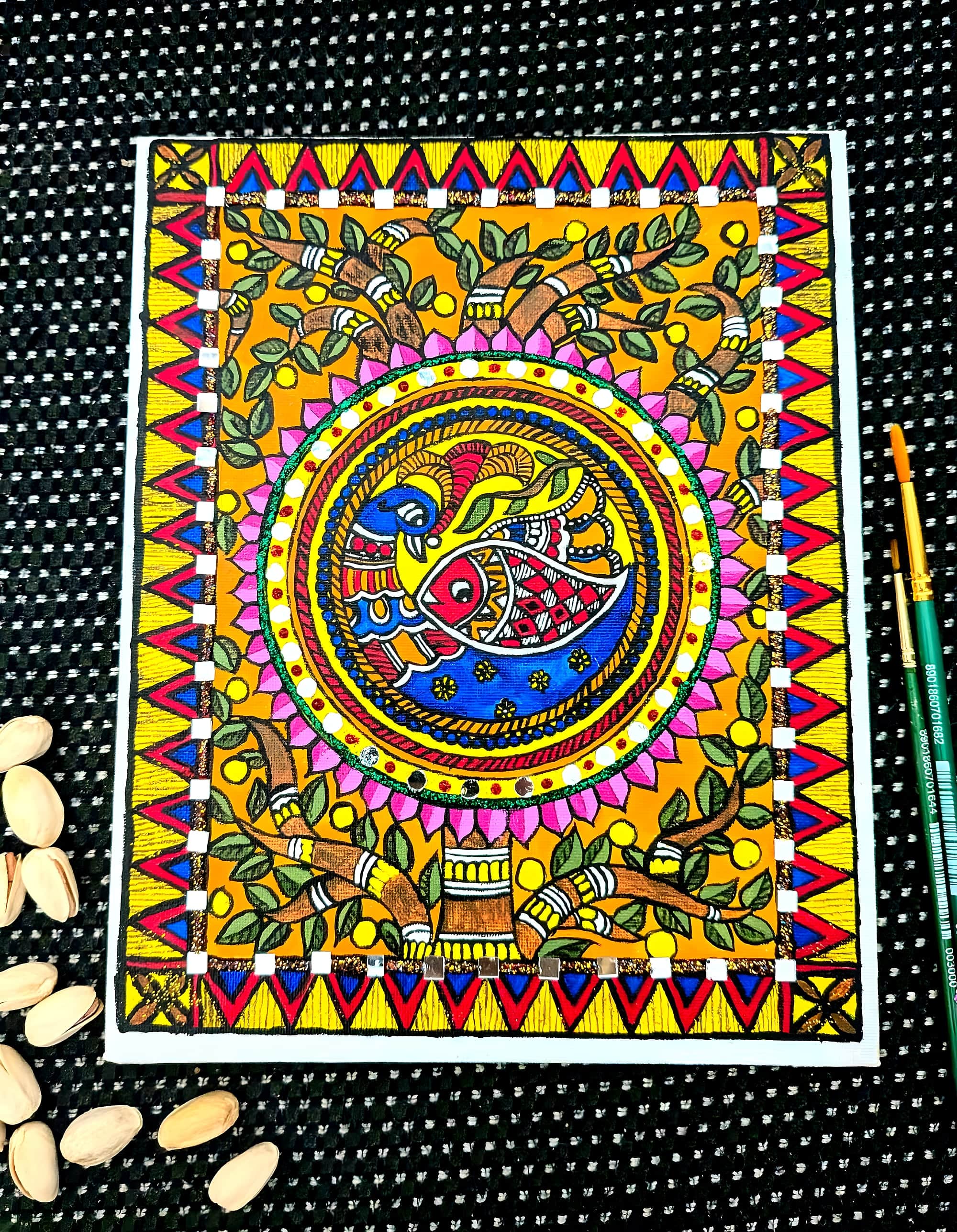
Practical
Getting there
Fly
Darbhanga Airport (DBR), with flights from Delhi, Mumbai, Bengaluru, Kolkata.
Train
Darbhanga Junction, with trains from Delhi, Kolkata and Patna.
Road
140 km north of Patna via Hajipur and Muzaffarpur, 3.5 hours.
On the map · Darbhanga is at 26.1542°N, 85.8918°E in Darbhanga district, about 126 km (3 h) by road from Patna.
Before you go · Best time to visit · Safety, dress code & money · What to eat nearby
Practical
Distances from Darbhanga
Road distance and realistic driving time on Bihar roads — plan around these, not the straight line on a map.
From the gateway cities
| Muzaffarpur → Darbhanga | 69 km | 1½ h |
| Patna → Darbhanga | 126 km | 3 h |
| Bhagalpur → Darbhanga | 194 km | 4½ h |
| Gaya → Darbhanga | 228 km | 5½ h |
To nearby places
| Darbhanga → Madhubani | 37 km | 0½ h |
| Darbhanga → Kusheshwar Asthan | 79 km | 1½ h |
| Darbhanga → Sitamarhi | 83 km | 2 h |
| Darbhanga → Kanwar Lake | 84 km | 2 h |
| Darbhanga → Ugratara, Mahishi | 87 km | 2 h |
| Darbhanga → Vaishali | 102 km | 2½ h |
| Darbhanga → Sonepur Mela & Hariharnath | 113 km | 2½ h |
| Darbhanga → Patna | 127 km | 3 h |
| Darbhanga → Munger | 136 km | 3 h |
| Darbhanga → Kesaria Stupa | 137 km | 3 h |
| Darbhanga → Ashok Dham, Lakhisarai | 144 km | 3½ h |
| Darbhanga → Maner Sharif | 152 km | 3½ h |
Estimates: road ≈ 1.3 × straight-line, ~40 km/h average. All Bihar distances →