Highlights
- Sher Shah Suri's tomb — Go at opening (sunrise) when the lake is still and the stone is red..
- Hasan Khan Suri's tomb — The earlier, smaller octagon on dry land; usually empty..
- Alawal Khan's tomb — The architect's own, in town, badly neglected and worth finding..
- Rohtas Fort & Shergarh — Hilltop forts within 40–70 km..
Sher Shah Suri ruled north India for only five years (1540–45), but in that time he built the Grand Trunk Road, introduced the rupee and reorganised the administration that the Mughals would later claim as their own. He was a Bihari from Sasaram, and he began his own tomb while he was still alive.
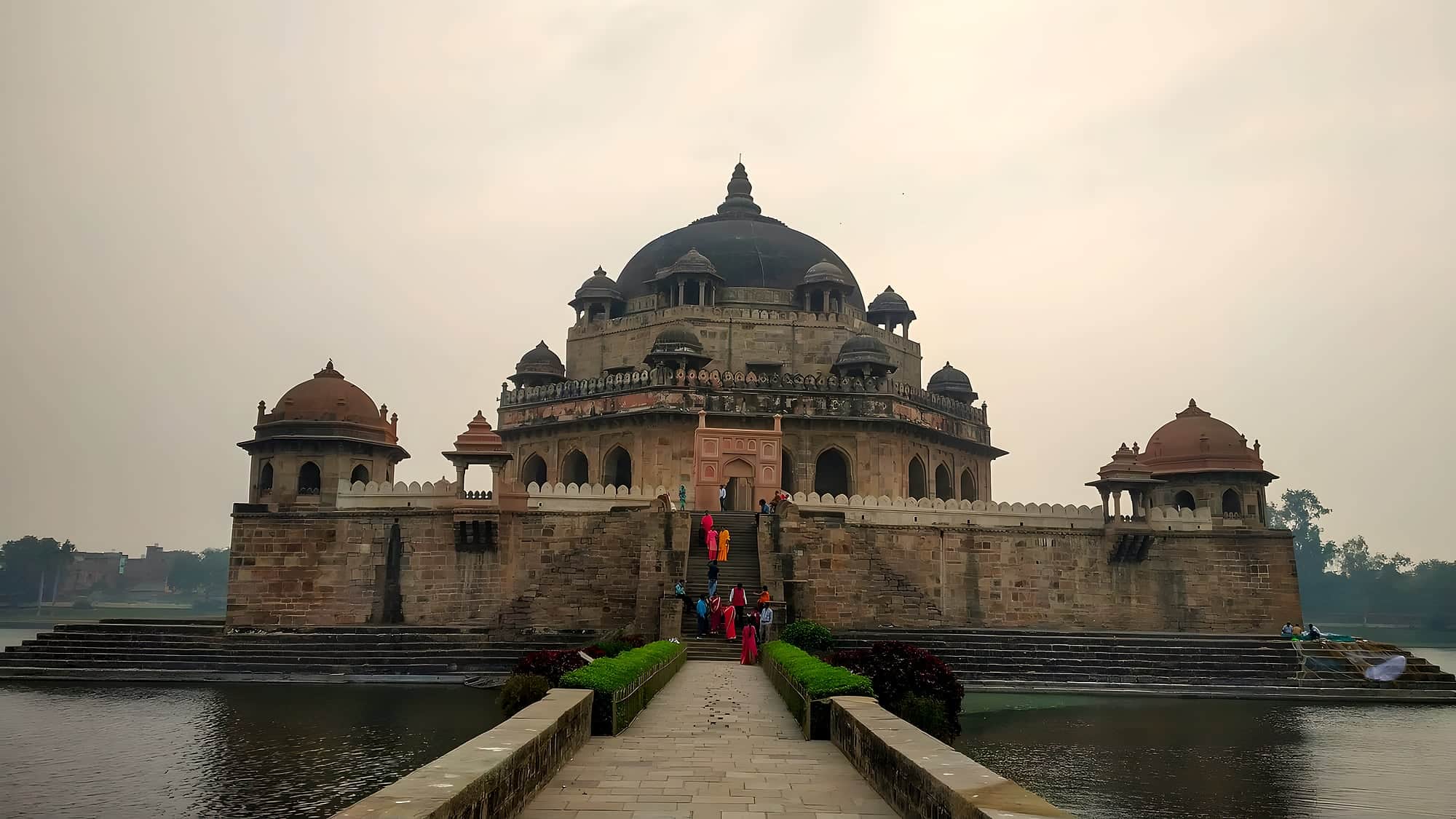
The result is extraordinary: a five-tiered red sandstone octagon crowned by a 22-metre dome, standing on a stone terrace in the centre of a square lake 370 metres across. You reach it by a causeway from the north bank. Inside, the dome is one of the largest in India; outside, the original glazed tiles still cling in blue and yellow to the chhatris. The architect, Aliwal Khan, had built the tomb of Sher Shah's father Hasan Khan a kilometre away as a rehearsal.
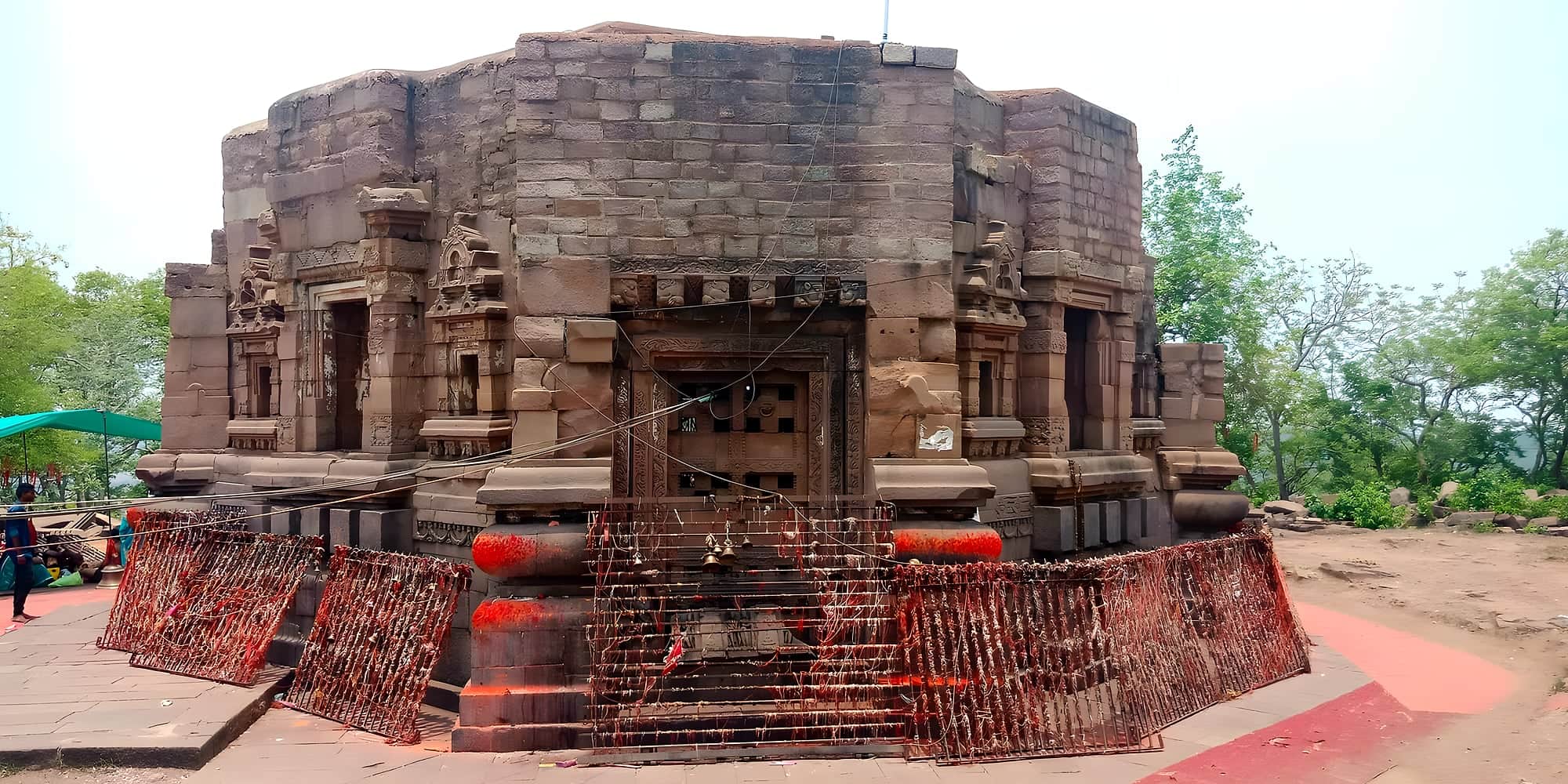
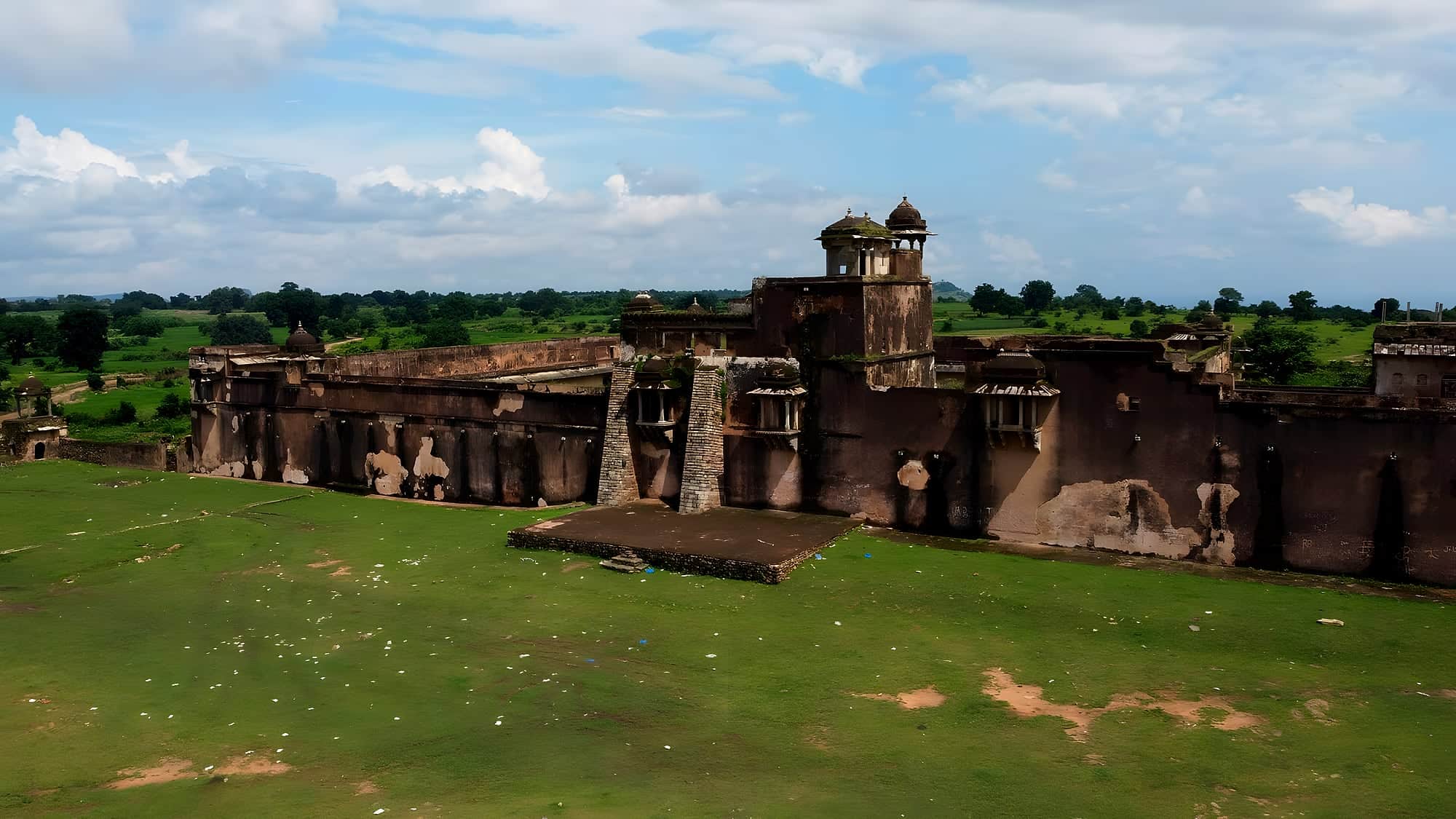
Sasaram sits on the old Grand Trunk Road under the Kaimur hills. Rohtasgarh fort and the Shergarh fort are in the hills to the south; the Mundeshwari temple is an hour west. Together they make the best two-day trip in Bihar that no guidebook recommends.
Chapter 01
How it came to be
Farid Khan, the son of an Afghan jagirdar in Sasaram, earned the name Sher — 'tiger' — for killing one unarmed, rose through Mughal service, and then threw the Mughals out of India. In five years as emperor (1540–45) he built the Grand Trunk Road from Bengal to the Indus, minted the first rupee, mapped and surveyed the land revenue, and set up the postal system the Mughals and British later took credit for. Humayun, whom he defeated twice, got the empire back only after Sher Shah's death at the siege of Kalinjar.
The mausoleum he commissioned in his hometown was finished three months after he died. It is the climax of the Lodi-Sur style — an octagon on a square terrace in the middle of an artificial lake, bigger than any Mughal tomb before the Taj — and is widely regarded as the finest Indo-Islamic building between the Delhi Sultanate and Humayun's Tomb. His father Hasan Khan Sur lies in a smaller tomb a kilometre away; his son Salim Shah's tomb, unfinished, stands in another lake nearby.
Chapter 02
What it's like now
Sasaram is a dusty junction town on the Grand Trunk Road that has never really noticed the masterpiece in its middle. You walk down from the road, through a gate, and the lake opens with the tomb floating on it — grey-red sandstone, three storeys of arcades and chhatris, a dome that reads as a mountain. A stone causeway crosses from the north bank. Inside, the octagonal hall is high and dim, with traces of the original coloured glaze, and the acoustics return a whisper from the far wall.
The town is also the base for the Kaimur edge: Rohtasgarh fort on its plateau, the Dhua Kund and Manjhar Kund waterfalls, and Mundeshwari temple. The Tarachandi shrine in a cleft of the hills south of town is where Sasaram's own people go at dusk.
Chapter 03
What to see
- 01
Sher Shah Suri's tomb
Go at opening (sunrise) when the lake is still and the stone is red.
- 02
Hasan Khan Suri's tomb
The earlier, smaller octagon on dry land; usually empty.
- 03
Alawal Khan's tomb
The architect's own, in town, badly neglected and worth finding.
- 04
Rohtas Fort & Shergarh
Hilltop forts within 40–70 km.
- 05
Tarachandi & Dhuan Kund
Hillside shrine and seasonal waterfall just south of town.
Chapter 04
A perfect day
6:00
Sher Shah's tomb at opening — the light on the water, the geese, no one else.
8:00
Hasan Khan Sur's tomb, then Salim Shah's unfinished tomb.
10:00
Drive to Manjhar Kund and Dhua Kund (monsoon), or the Ashokan minor rock edict at Chandan Shahid hill.
13:00
Lunch at a GT Road dhaba.
15:00
Tarachandi temple in the hills, then the Shergarh fort ruins if time allows.
17:30
Back at the lake for the sunset — the stone turns to brick-red.
Chapter 05
Stay, eat, celebrate
Where to stay
A handful of decent hotels near the station and on the GT Road; Bihar Tourism's Sher Shah Vihar. Dehri-on-Sone (20 km) has a few more.
Where to eat
Dhabas on the Grand Trunk Road — this is where the GT Road dhaba was invented; mutton and roti at the old-town shops near the tomb.
Festivals & seasons
Sasaram Mahotsav (varies); Navratri at Tarachandi.
Practical
Getting there
Fly
Varanasi Airport (VNS) 120 km; Gaya (GAY) 130 km; Patna (PAT) 160 km.
Train
Sasaram Junction, on the Gaya–Mughalsarai line, with trains from Delhi, Kolkata and Patna.
Road
On NH-19 (the old GT Road), 160 km from Patna, about 4 hours.
On the map · Sasaram is at 24.9494°N, 84.0141°E in Rohtas district, about 175 km (4 h) by road from Patna.
Before you go · Best time to visit · Safety, dress code & money · What to eat nearby
Practical
Distances from Sasaram
Road distance and realistic driving time on Bihar roads — plan around these, not the straight line on a map.
From the gateway cities
| Gaya → Sasaram | 131 km | 3 h |
| Patna → Sasaram | 175 km | 4 h |
| Muzaffarpur → Sasaram | 244 km | 6 h |
| Darbhanga → Sasaram | 300 km | 7½ h |
| Bhagalpur → Sasaram | 391 km | 9½ h |
To nearby places
| Sasaram → Dhua Kund & Manjhar Kund | 17 km | 30 min |
| Sasaram → Tutla Bhawani | 24 km | 30 min |
| Sasaram → Shergarh Fort | 34 km | 0½ h |
| Sasaram → Rohtasgarh Fort | 49 km | 1 h |
| Sasaram → Mundeshwari Temple | 59 km | 1 h |
| Sasaram → Bakhtiyar Khan's Tomb, Chainpur | 67 km | 1½ h |
| Sasaram → Deo Sun Temple | 70 km | 1½ h |
| Sasaram → Telhar Kund & Karkatgarh | 80 km | 2 h |
| Sasaram → Buxar | 89 km | 2 h |
| Sasaram → Jagdishpur & Arrah | 91 km | 2 h |
| Sasaram → Gaya | 131 km | 3 h |
| Sasaram → Bodh Gaya | 133 km | 3 h |
Estimates: road ≈ 1.3 × straight-line, ~40 km/h average. All Bihar distances →
Practical
Sasaram tickets, entry fee & timings
What visitors have been paying recently. Fees change without notice — treat these as a planning guide and check the official page where one exists.
Sher Shah Suri's Tomb (ASI)
- Hours
- Sunrise – sunset
- Fee
- ₹25 Indian / SAARC, ₹300 foreign; under-15s free. Boat on the tank by negotiation.
- Booking
- Counter or ASI portal. Rohtasgarh fort (40 km) is free.