Highlights
- Gandak rafting — Grade I–II, 6–8 km, about an hour on the water; Bihar Tourism and forest-department operators from the eco-park, November–March..
- Gharial & dolphin boat safari — Dawn boat below the barrage — gharial bask on the sandbars, dolphins in the deep channel..
- Triveni Sangam — The confluence where the river enters India; bathing ghat, Shivratri fair, views up the gorge..
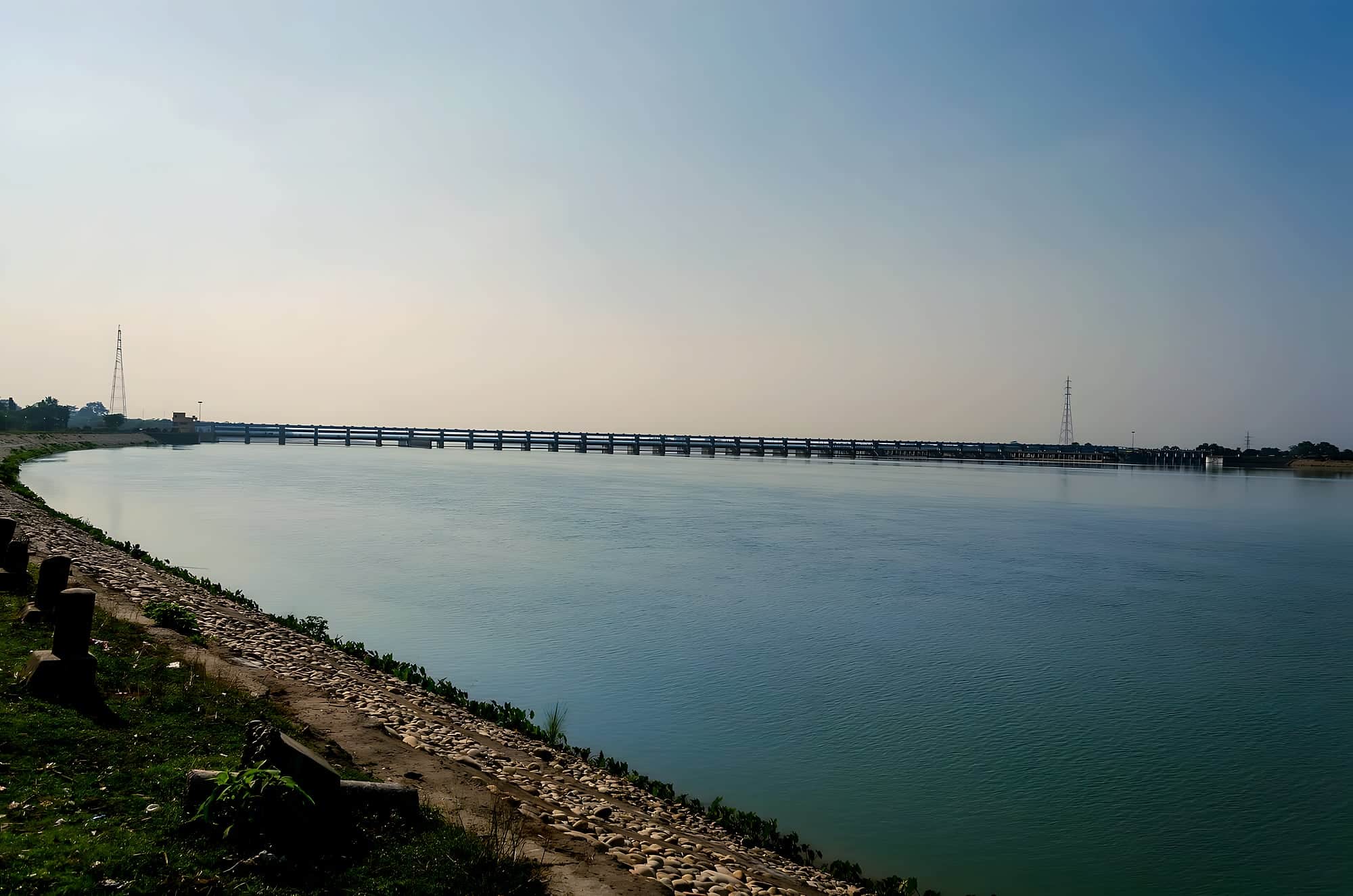
- Gandak barrage — Walk out on the 1960s barrage at sunset — hills one side, the braided river the other, Nepal across..
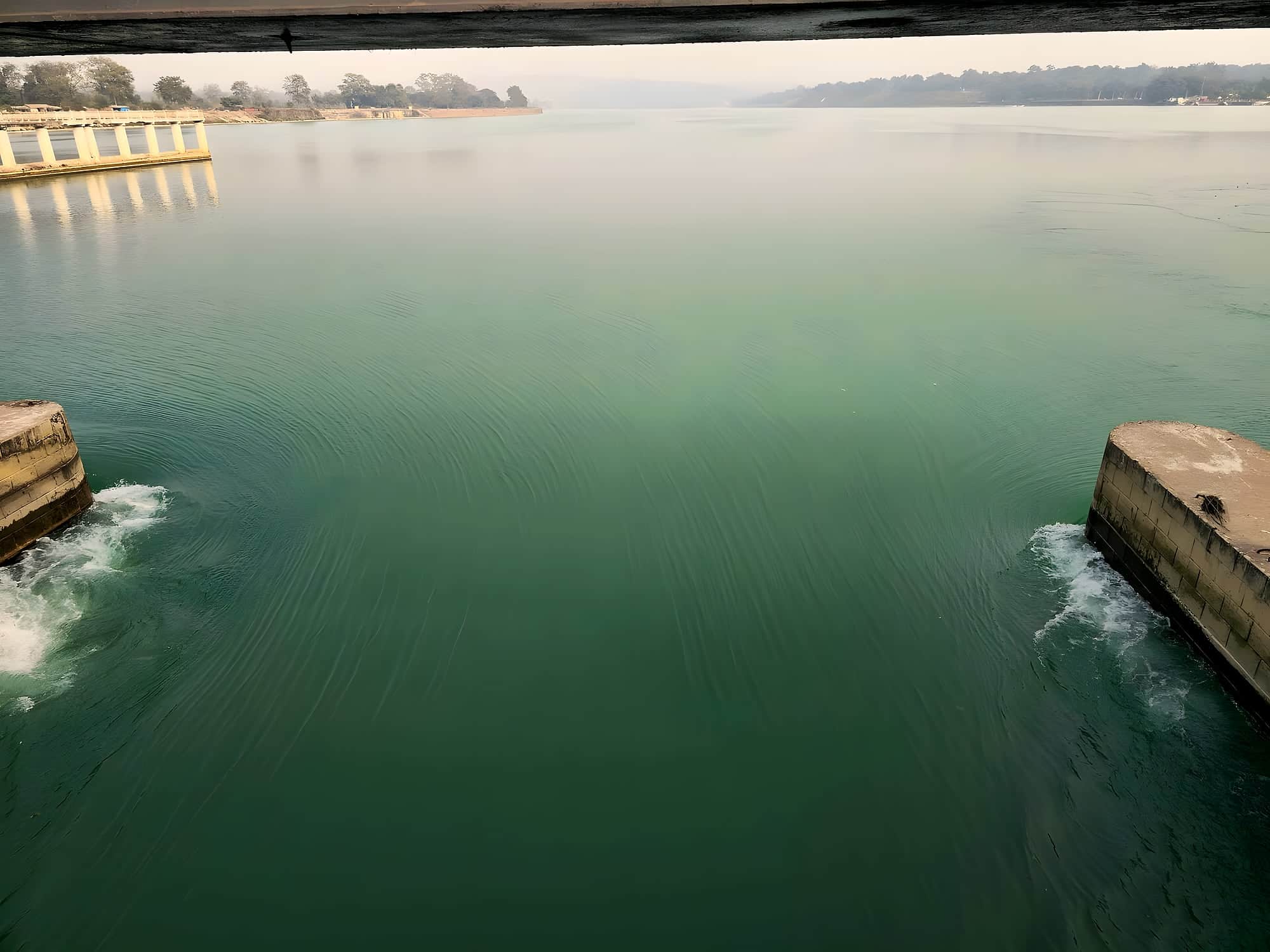
The Gandak — the Narayani in Nepal — is one of the great Himalayan rivers, rising on the Tibetan border and cutting through the Mahabharat range before it bursts out onto the plain at Triveni, where three streams meet and India begins. The 1960s barrage that spans it here irrigates both countries, and the pool above it and the braided channels below have become a small, serious water-sports destination.
Bihar Tourism launched rafting on the Gandak in 2023: Grade I–II rapids over a 6–8 km stretch below the hills, gentle enough for first-timers and families, with kayaks, canoes and motorboats on the calmer reaches. The real wildlife is in the water — the Gandak holds the largest population of gharial in India outside the Chambal, released here by the Forest Department since 2014, and Gangetic dolphins surface in the deeper channels. Early-morning boat safaris from the eco-park find both.
On the bank, Valmikinagar is a plain, friendly town with a very old story: tradition places Valmiki's ashram here, where Sita lived in exile and Lava and Kusha were born, and the Triveni confluence is a bathing site on Makar Sankranti and Shivratri. The Nepal border post is a short walk; the Shivalik hills, the forest and the tiger reserve are at your back; and in winter the whole place has a cool, clear, Himalayan light. Pair it with the tiger reserve for Bihar's best wild long weekend.
Chapter 01
How it came to be
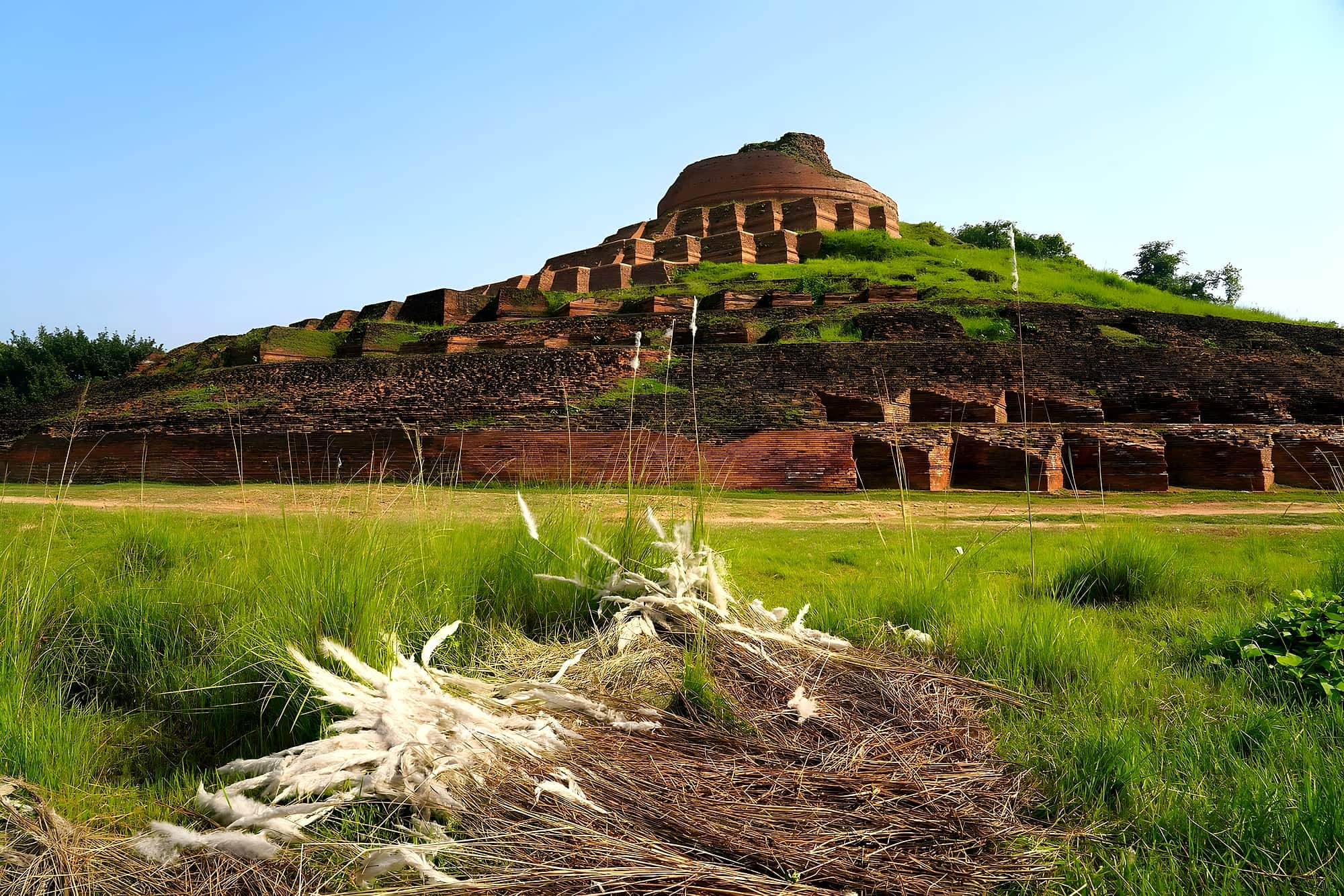
The Gandak comes out of the Himalaya through one of the deepest gorges on earth, between Dhaulagiri and Annapurna, and arrives at the plains here at Triveni, where it is joined by two smaller streams and crosses into India. The Gandak Project barrage, built jointly by India and Nepal between 1959 and 1969, turned the border town of Bhainsalotan into Valmikinagar — named for the sage whose hermitage tradition places on this bank, where Sita bore Lava and Kusha.
Gharial, hunted nearly to extinction, were released into the Gandak from 2014 by the Bihar forest department and the Wildlife Trust of India; the river now holds the second-largest wild population in the world. Rafting began in 2023 as part of the state's push to make the Champaran forest a destination.
Chapter 02
What it's like now
The river is the attraction and the forest the backdrop. Mornings go on the water: a boat below the barrage at first light finds gharial basking on sandbars, their long snouts raised, and dolphins rolling in the channels. Then the raft — a bright, bouncing hour down Grade I–II riffles with the Shivaliks on your right and Nepal on your left, gentle enough for children and grandparents.
Afternoons are for the barrage walk, the Triveni ghat, the ashram, and the Valmiki tiger reserve's safari gates ten minutes away. Nights at the eco-huts are cold, dark and loud with forest. It is the wild weekend Bihar never knew it had.
Chapter 03
What to see
- 01
Gandak rafting
Grade I–II, 6–8 km, about an hour on the water; Bihar Tourism and forest-department operators from the eco-park, November–March.
- 02
Gharial & dolphin boat safari
Dawn boat below the barrage — gharial bask on the sandbars, dolphins in the deep channel.
- 03
Triveni Sangam
The confluence where the river enters India; bathing ghat, Shivratri fair, views up the gorge.
- 04
Gandak barrage
Walk out on the 1960s barrage at sunset — hills one side, the braided river the other, Nepal across.
- 05
Valmiki Ashram
The sage's hermitage by tradition; a small, peaceful temple compound on the bank.
- 06
Kayaking & camping
Sit-on-top kayaks on the barrage pool; eco-huts and riverside tents at the eco-park.
Chapter 04
A perfect day
6:00
Gharial and dolphin boat safari below the barrage.
8:30
Breakfast at the eco-park; the canopy walk.
10:00
Rafting — kit up at the eco-park, drive to the put-in, an hour on the water.
13:00
Lunch; rest.
15:00
Afternoon tiger safari from the Valmikinagar gate, or Triveni Sangam and the ashram.
17:30
Walk out on the barrage for sunset over the river and Nepal.
Chapter 05
Things to do
Rafting
Grade I–II; life jackets and helmets provided; children over 10.
Kayaking
Sit-on-top kayaks on the barrage pool — calm water, self-paddle.
Gharial & dolphin boat
Dawn is best; the sandbars below the barrage.
Tiger safari
Valmikinagar range gate, 10 minutes away — see the Valmiki National Park guide.
Riverside camping
Tents at the eco-park; bonfire, Tharu dinner.
Chapter 06
Stay, eat, celebrate
Where to stay
Forest Department eco-huts and tents at the Valmikinagar eco-park; Bihar Tourism's bamboo huts; a couple of basic lodges in town. Book ahead for winter weekends.
Where to eat
Eco-park kitchen; Tharu meals at homestays; town dhabas for litti and dal-bhaat.
Festivals & seasons
Shivratri and Makar Sankranti fairs at Triveni; the Tharu Mahotsav in winter.
In pictures
All 3 Valmikinagar & the Gandak photos →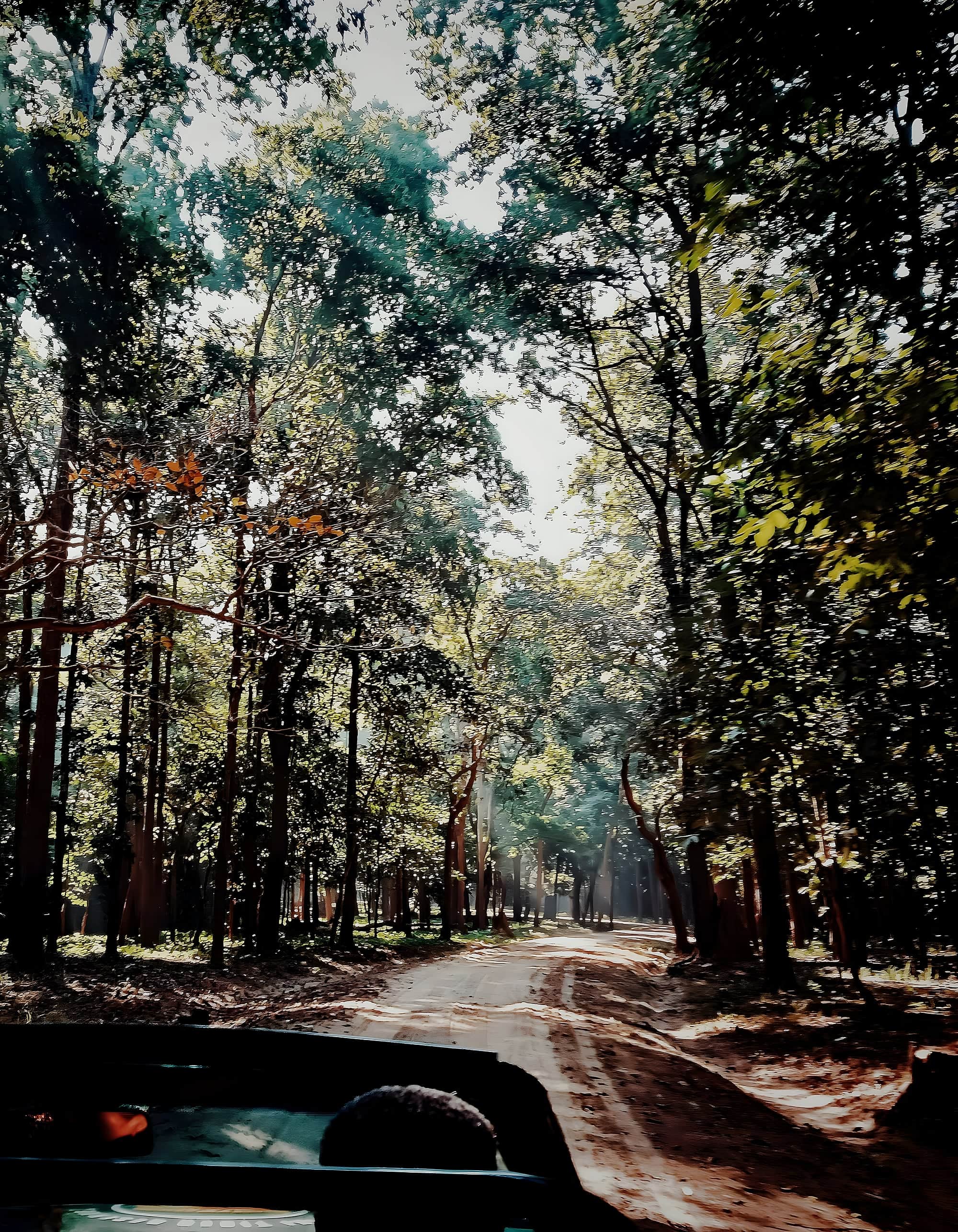
Practical
Getting there
Fly
Gorakhpur (GOP) 130 km; Patna (PAT) 290 km.
Train
Valmikinagar Road station 5 km; Narkatiaganj Junction 45 km, with trains from Patna, Gorakhpur, Delhi.
Road
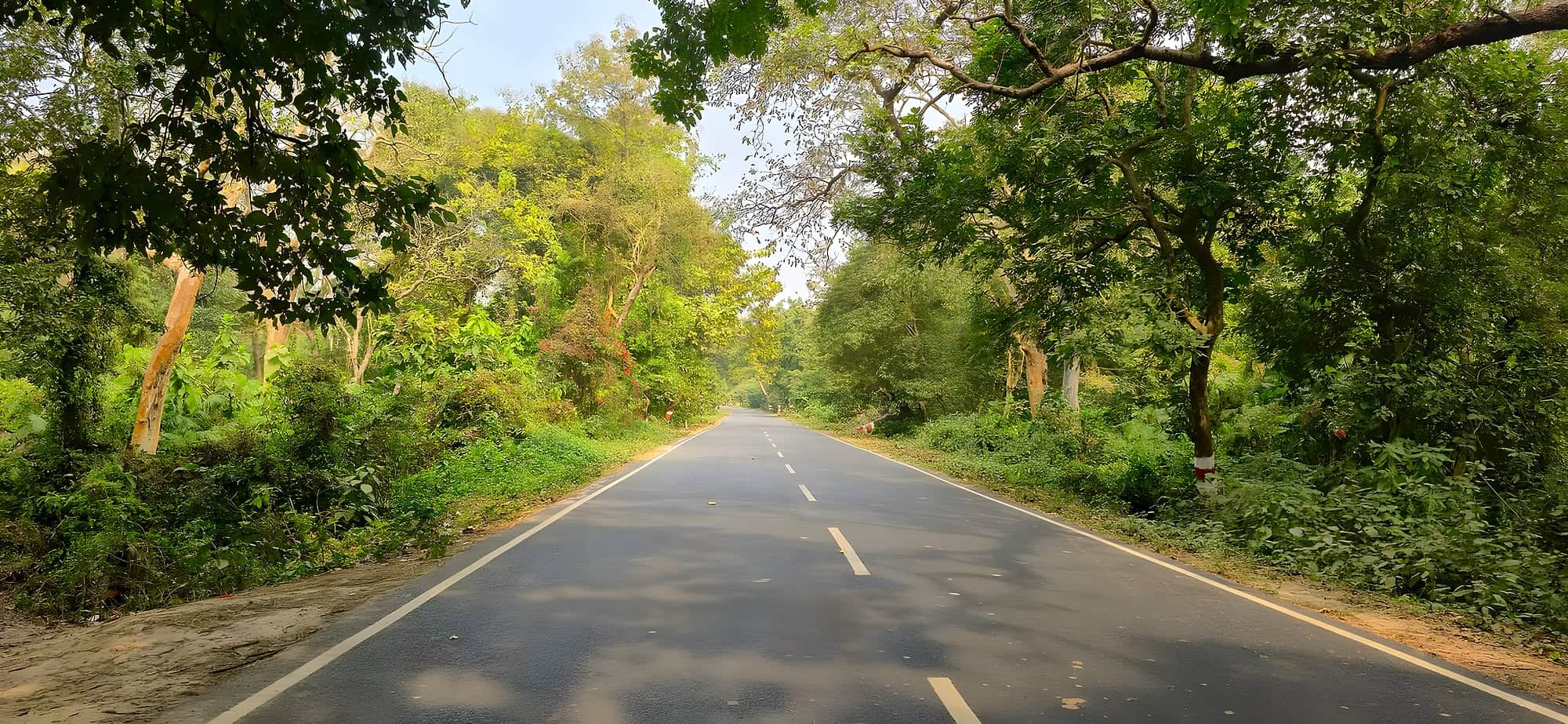
From Bettiah 90 km or Narkatiaganj 45 km. 6–7 hours from Patna via Muzaffarpur–Motihari–Bettiah.
On the map · Valmikinagar & the Gandak is at 27.3465°N, 83.9253°E in West Champaran district, about 296 km (7 h) by road from Patna.
Before you go · Best time to visit · Safety, dress code & money · What to eat nearby
Practical
Distances from Valmikinagar & the Gandak
Road distance and realistic driving time on Bihar roads — plan around these, not the straight line on a map.
From the gateway cities
| Muzaffarpur → Valmikinagar & the Gandak | 257 km | 6 h |
| Patna → Valmikinagar & the Gandak | 296 km | 7 h |
| Darbhanga → Valmikinagar & the Gandak | 307 km | 7½ h |
| Gaya → Valmikinagar & the Gandak | 394 km | 9½ h |
| Bhagalpur → Valmikinagar & the Gandak | 500 km | 12½ h |
To nearby places
Estimates: road ≈ 1.3 × straight-line, ~40 km/h average. All Bihar distances →