Bodh Gaya photos
9 pictures of Bodh Gaya in Gaya district — UNESCO World Heritage site where Gautama Buddha attained enlightenment under the Bodhi Tree. The Mahabodhi Temple rises 55 metres above a town of monasteries built by a dozen Buddhist nations. Each is captioned with what it shows; tap any to enlarge the credit. Read the Bodh Gaya guide.
01 / 09
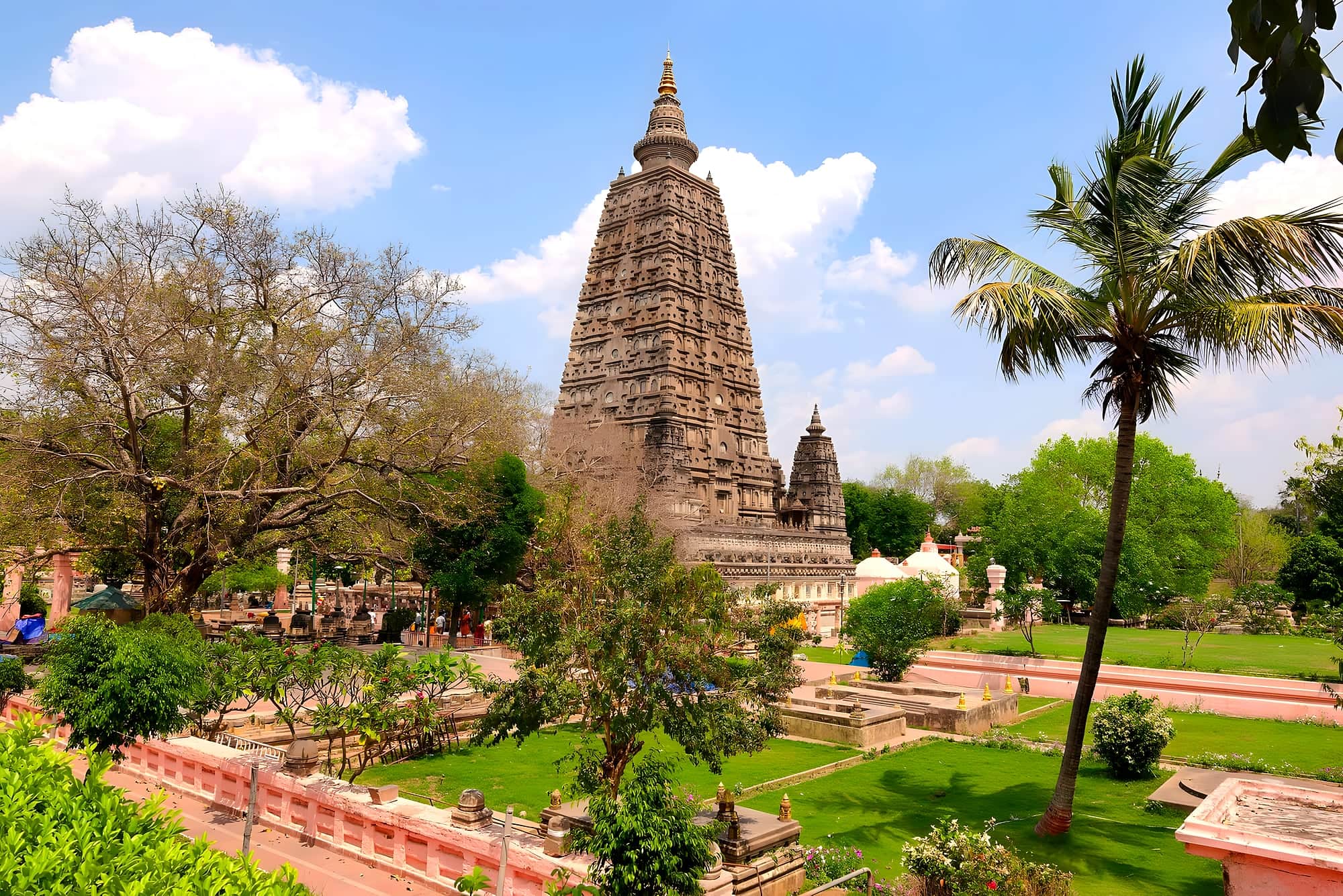
Mahabodhi temple complex, Bodhgaya 23
Rohit Sharma · CC BY-SA 4.0 · source
02 / 09
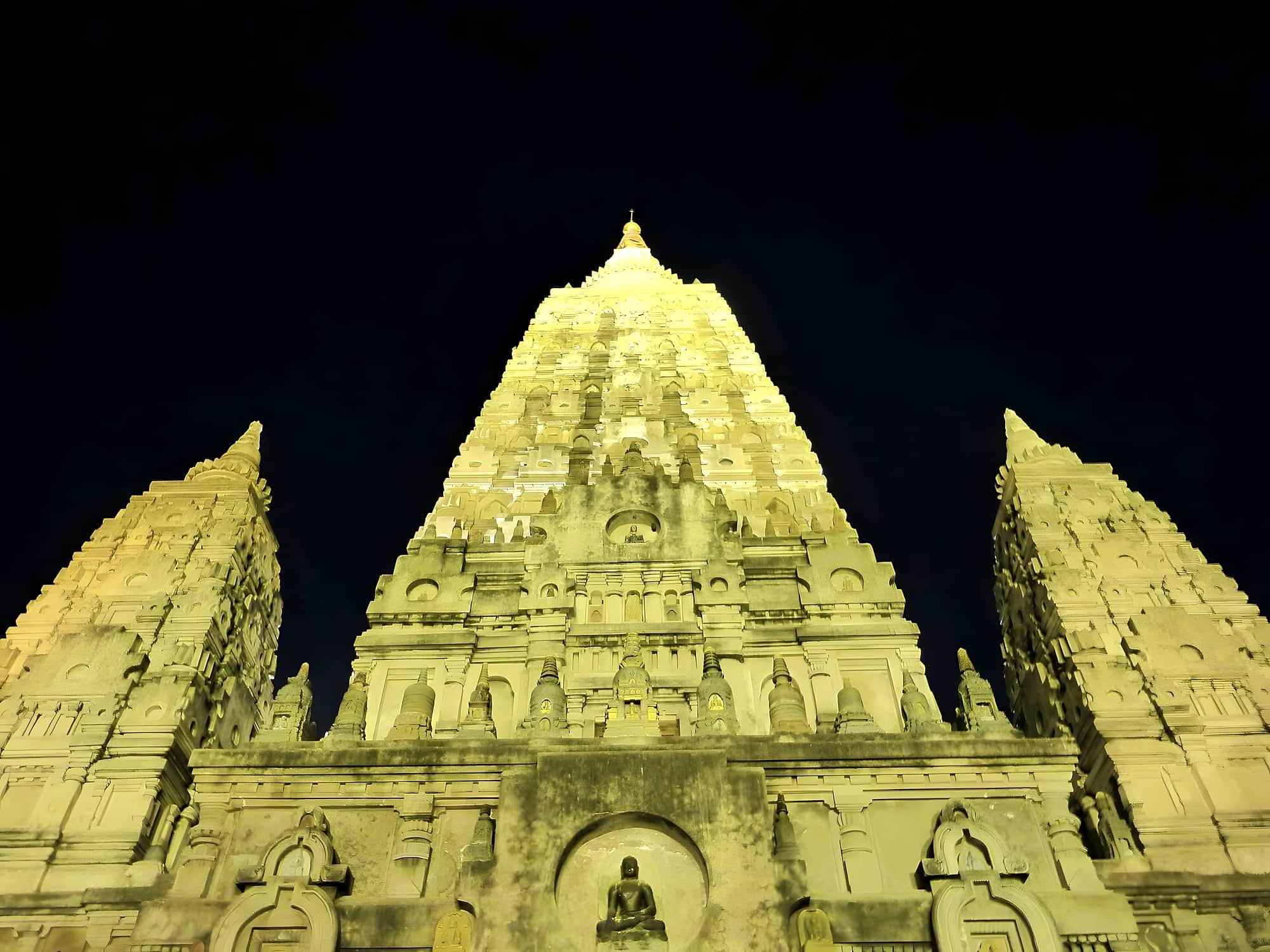
Mahabodhi Temple
UNESCO · 5th–6th c. · Centre of town
A 55 m brick tower on Ashokan foundations with a gilded Buddha in bhumisparsha mudra inside. Walk the inner circuit clockwise; the seven stations of the seven weeks after enlightenment ring the complex — the Animeshlochana (unblinking gaze), the Ratnachakrama jewel-walk, the Muchalinda lotus pond.
03 / 09
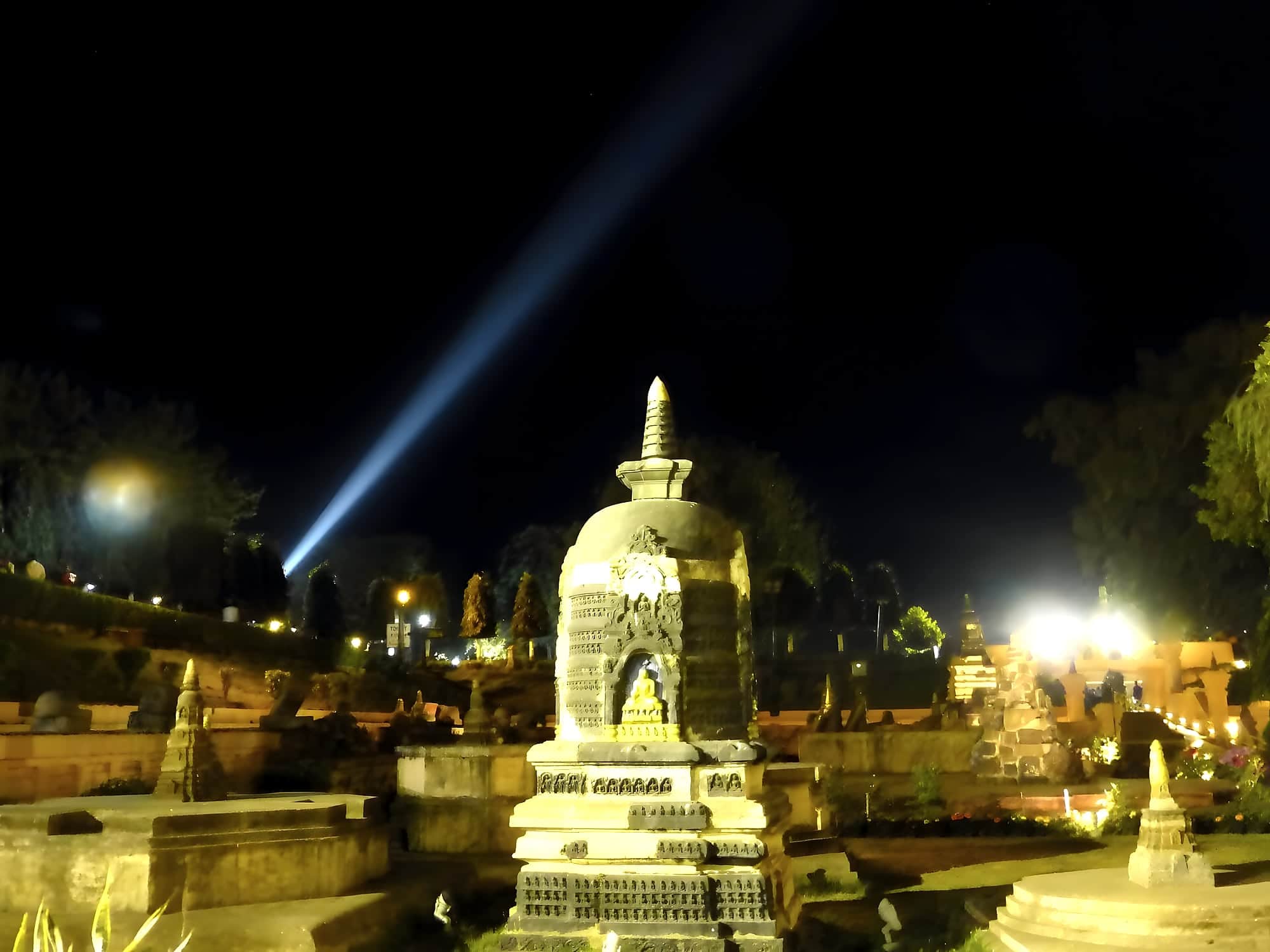
Mahabodhi Temple - Temple Garden at Night
04 / 09
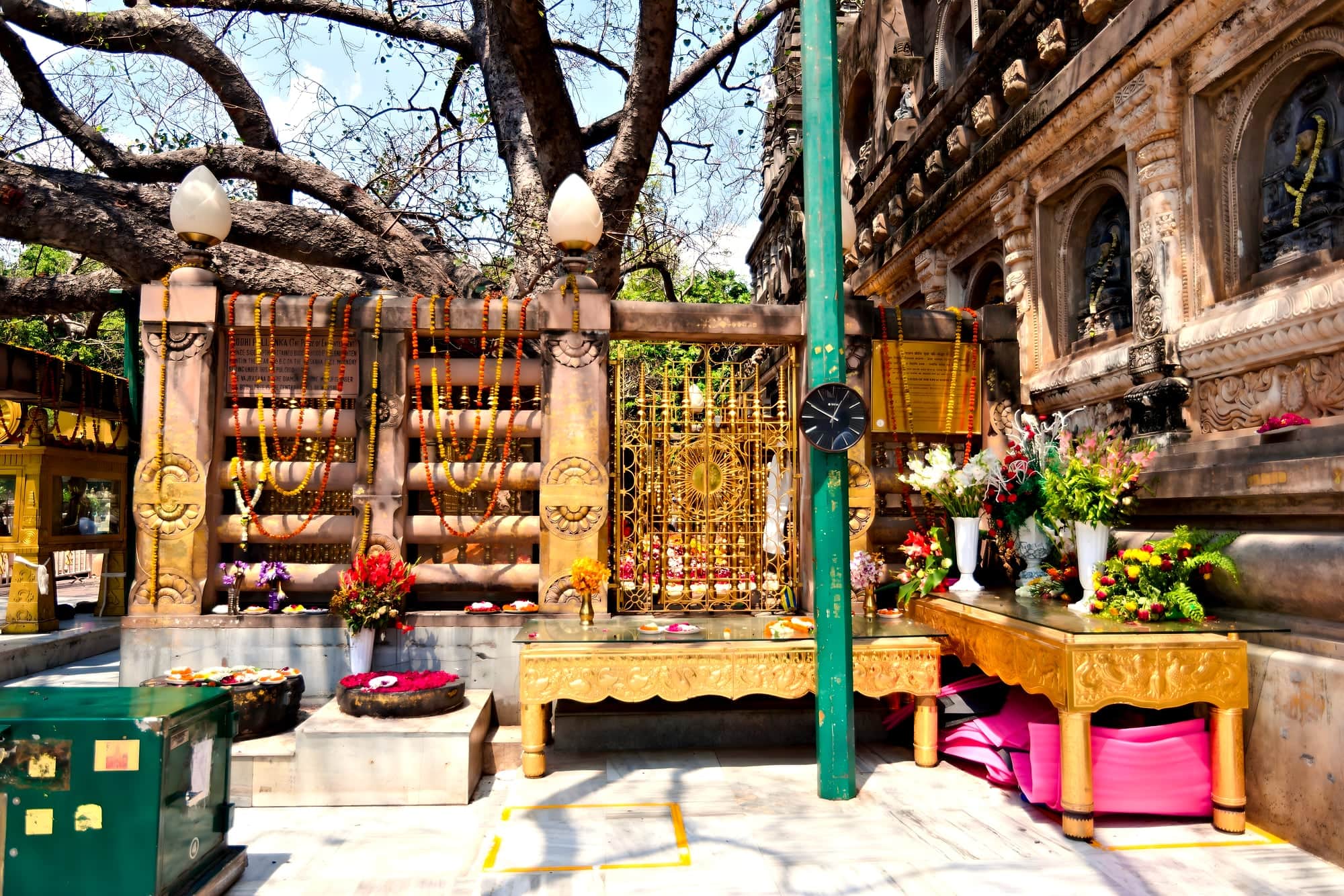
The Bodhi Tree
Sacred tree · West wall of the Mahabodhi Temple
A pipal grown from a cutting of the Sri Lankan Jaya Sri Maha Bodhi, itself grown from the original. The Vajrasana — Ashoka's polished sandstone 'diamond throne' — sits beneath it, railed off, marking the exact seat of enlightenment. Leaves that fall are collected by pilgrims; wait, don't pick.
Rohit Sharma · CC BY-SA 4.0 · source
05 / 09
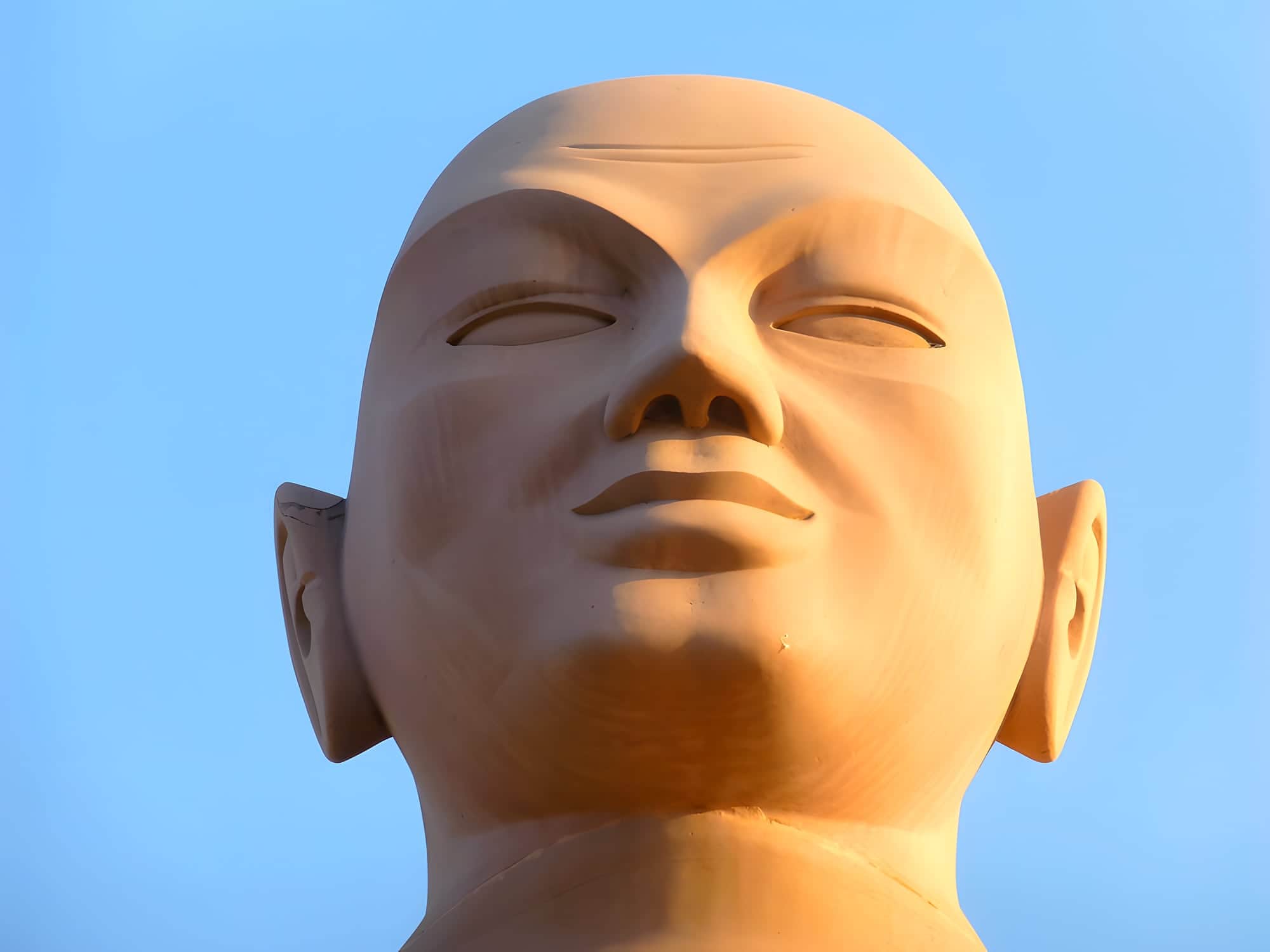
Great Buddha Statue
1989 · 25 m · 1 km south, past the Japanese temple
Sandstone and red granite, seated in meditation on a lotus, consecrated by the Dalai Lama in 1989 after seven years' work by the Daijokyo sect. Ten smaller disciple statues flank the path. Best in late-afternoon light.
06 / 09
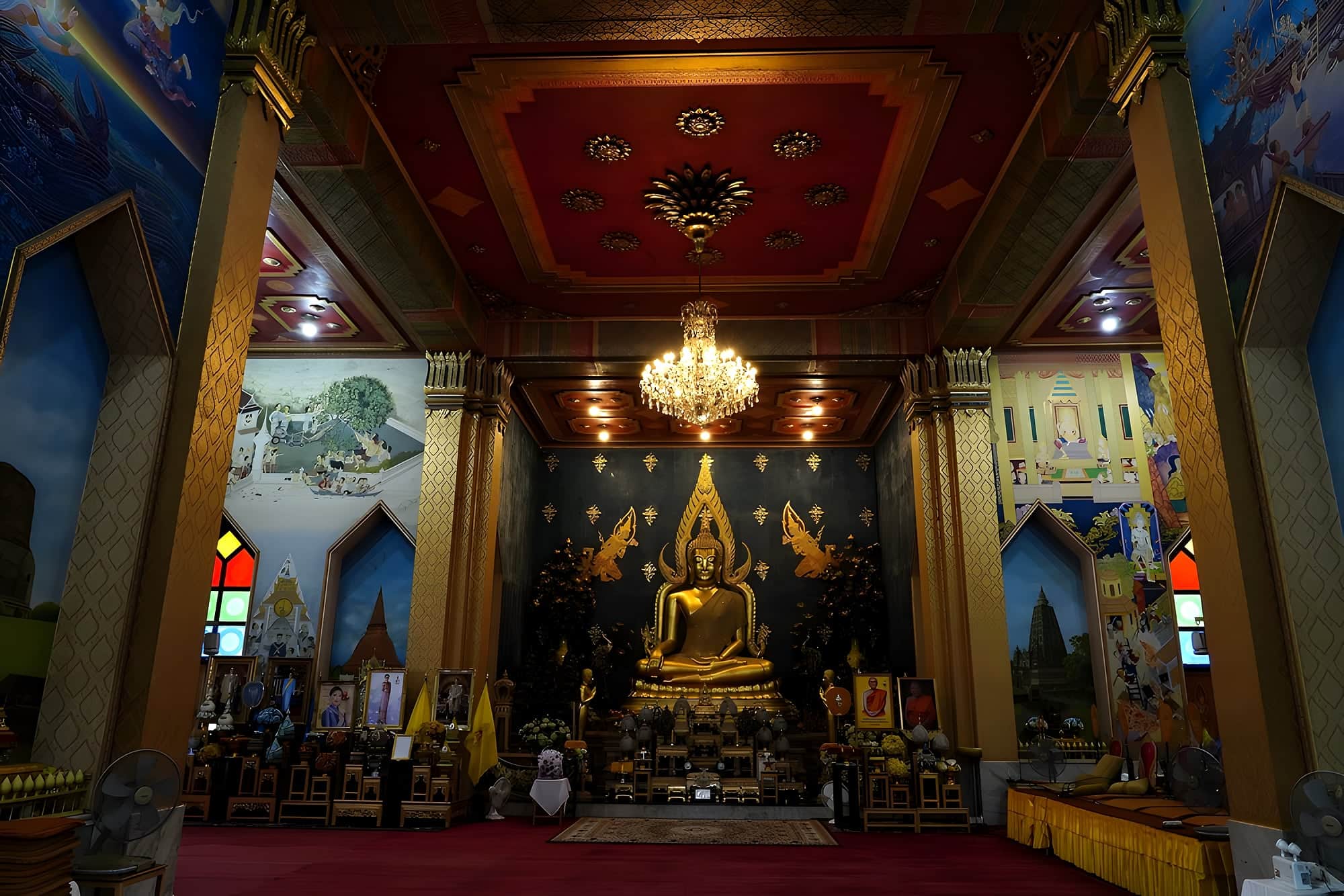
Wat Thai Buddhagaya
Thailand · 1957 · Bodh Gaya Road, 1 km
The first of the foreign monasteries, built by the Thai government — a sweeping gold-tiled roof and a Thai-style bronze Buddha. Evening chanting is open to visitors; the garden is a quiet place to sit when the main temple is crowded.
07 / 09
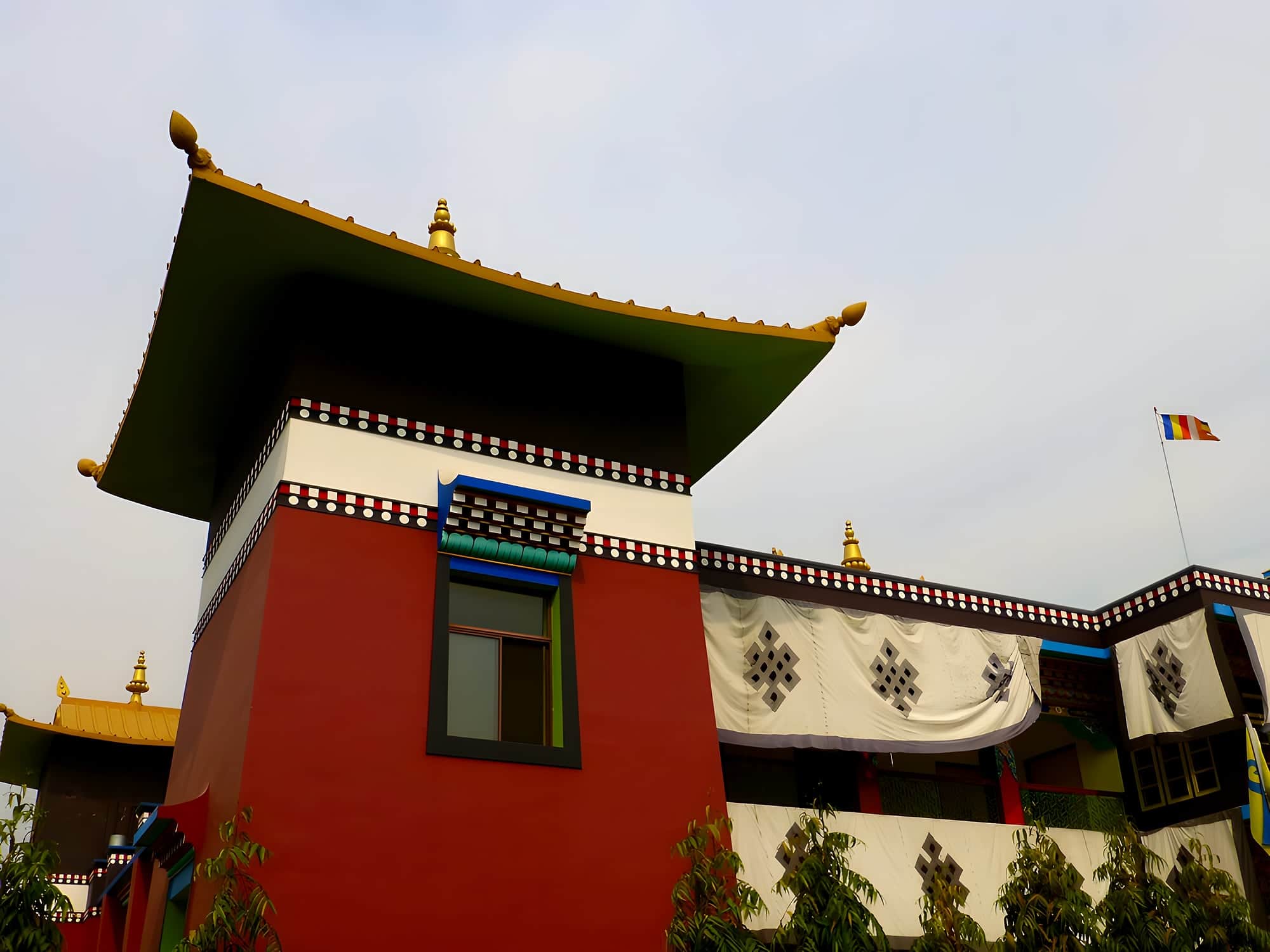
Tergar Monastery
Tibet (Karma Kagyu) · Off the bypass, 1.5 km
Seat of the Karmapa in Bodh Gaya and venue of the Kagyu Monlam each winter, when thousands of monks fill the courtyard. Vast prayer hall, intricate thangkas, and a small café.
08 / 09
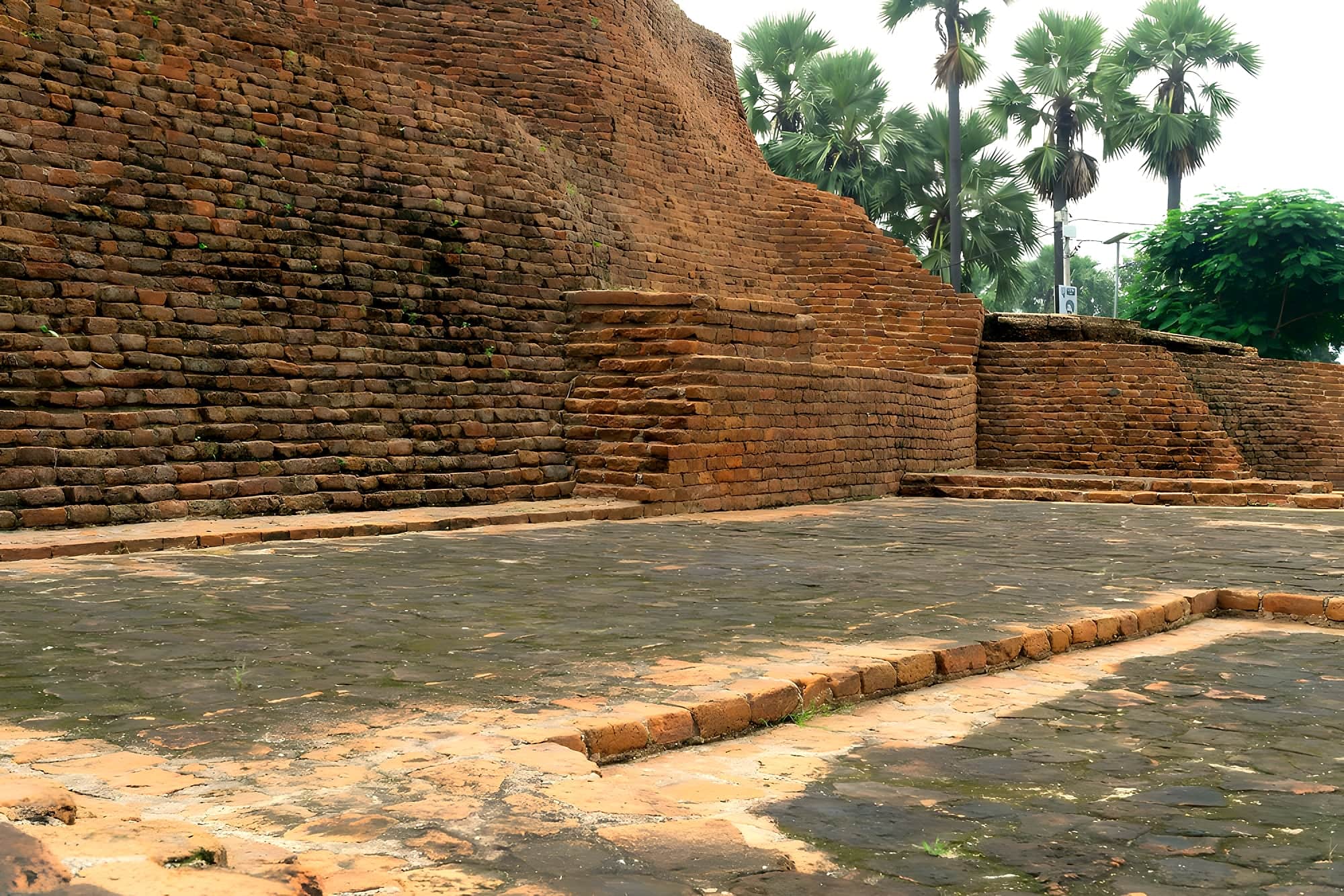
Sujata Stupa & Sujata Village
Across the Phalgu · 2 km east, over the river
The brick mound where the village girl Sujata offered rice-milk to the emaciated Siddhartha — the meal that ended his austerities. Excavated in 1973–74; peaceful, with Bakraur village and a Sujata temple nearby.
Sumitsurai · CC BY-SA 4.0 · source
09 / 09
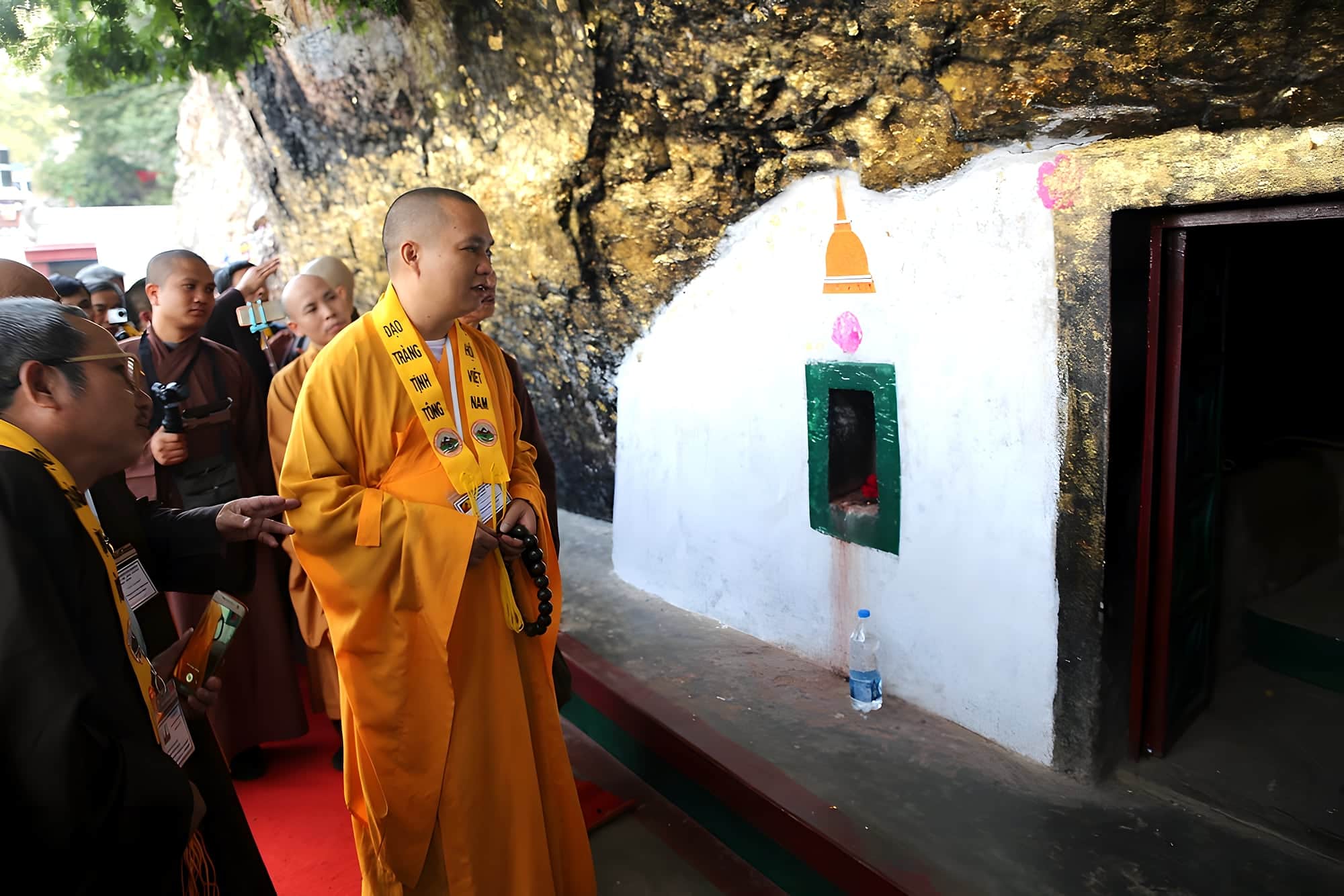
Dungeshwari (Mahakala) caves
Austerities hill · 12 km north-east
Three small caves on a hillside where the Buddha fasted for six years before Sujata. A golden emaciated Buddha sits in the main cave; Tibetan monks keep a monastery below. Combine with Sujata Stupa.